
The journal
Do crochet projects get bigger after blocking? Practical guide and routines
how to block crochet projects, understand how moisture and fiber affect size and how to test with a swatch to control results.
Quick answer: will blocking make my crochet project bigger?
Short answer: yes, blocking can change your crochet project's measurements and often makes pieces lie flatter and, in some cases, measure larger after drying because blocking applies moisture and sometimes heat to set stitches and adjust drape, which affects different fibers in different ways, so expect a measurable change especially when you wet block natural fibers The Spruce Crafts blocking guide
Do crochet projects get bigger after blocking?
Blocking can change a crochet project's size; fibers and method determine whether a piece grows, holds a stretch, or only relaxes slightly, so test a swatch with your chosen method to predict the final measurements.
For makers this means think of blocking as part of finishing: wool often keeps a pinned, slightly stretched shape while plant fibers can grow when wet, and synthetics need gentler handling to avoid permanent change; treating a swatch the same way you will treat the finished item is the reliable way to predict what will happen Interweave blocking overview. See our guides.
- Moisture is the active ingredient, with or without heat.
- Wool usually holds shape; cotton or linen may grow in size.
- Acrylic needs low heat or spray-and-pin methods to avoid damage.
What is blocking and the main methods used for crochet
Definition and purpose
Blocking is the finishing step where makers use water, steam, or dampness plus arranging and pinning to set stitch placement and shape; the aim is flatter fabric, more even stitch definition, and consistent finished dimensions when the item is dry, and craft tutorials have long recommended blocking as part of the sizing process Interweave blocking overview

Wet blocking versus steam blocking versus spray-and-pin
Wet blocking means thoroughly wetting the piece, gently shaping and pinning it to target dimensions, and letting it dry fully; this method gives maximum control over final size because fibers relax when saturated and will hold the new geometry after drying. A detailed overview is available at Brianak Designs.
Steam blocking uses controlled steam to relax fibers and smooth fabric without fully saturating the piece; it is useful for surface shaping and for finished garments that cannot be soaked, but steam delivers less total reshaping power than wet blocking and requires care on heat sensitive yarns The Spruce Crafts blocking guide
Spray-and-pin, sometimes called damp-blocking, sits between the other two: you mist the piece, pin it to shape, and let it dry. This is a safer incremental route when you want only small adjustments and when fibers or trims might not tolerate full saturation or steam treatment Interweave blocking overview
how to block crochet projects: quick method
If you need a short, practical method for most natural-fiber pieces, wet-block a gauge swatch and a small section of the project: soak, gently squeeze to remove excess water, lay flat on a blocking mat, pin to the dimensions you want, and allow complete drying; this simple wet-block routine is the baseline many makers use for final sizing
Tools that make these methods easier include a blocking board or foam mat and blocking pins or blocking wires to get straight edges and smooth curves; small projects may only need T-pins and a towel, while larger garments or blankets benefit from stronger pin supports and careful weight distribution The Spruce Crafts blocking guide. See our library for more on useful tools.
How fiber content determines whether a piece will grow or hold shape
Wool and animal fibres
Animal fibers such as wool are elastic and often accept stretching during wet or steam blocking, meaning they typically hold a pinned, stretched shape until the next wash, which is why many makers use blocked gauge as the reference when fitting wool garments
a short swatch testing checklist to record blocked changes
Plant fibres: cotton and linen
Cotton and linen have low elasticity, so when they are wet-blocked the yarn can relax into a looser geometry and the finished fabric may measure larger in width or length because the fibers do not spring back after stretching; for this reason many makers expect some measurable growth when wet-blocking plant fibers and plan accordingly
Synthetics: acrylic and blends
Acrylic and many synthetic blends resist water reshaping and can be sensitive to steam or high heat, where too much heat or close iron contact can permanently change the yarn's look and drape; gentler spray-and-pin or careful low-heat steaming on a swatch is the prudent approach for acrylics. See additional tips at Doradoes.
Testing and measuring: swatching for blocked gauge and predicting size change
How to make and treat a swatch
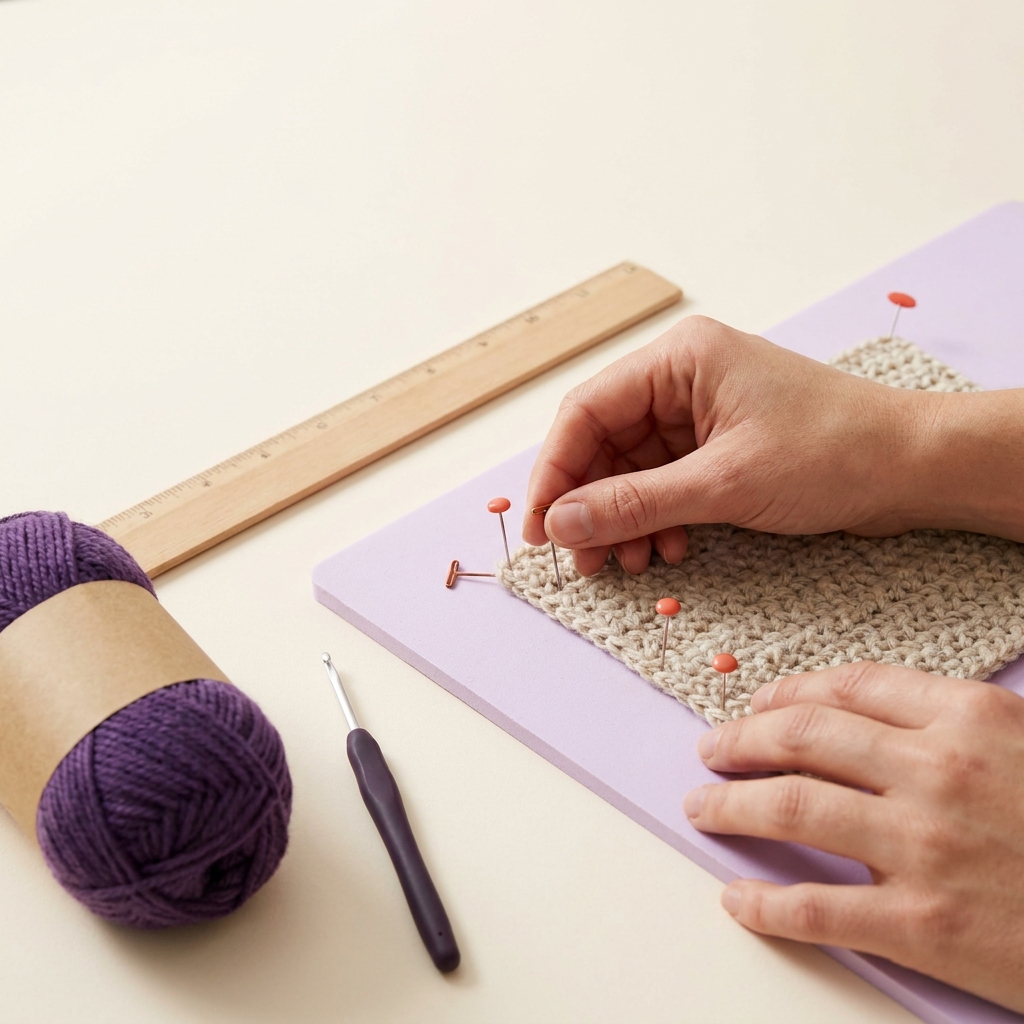
Make a gauge swatch in the stitch pattern and fabric density you plan to use, wide and tall enough to measure reliably, then finish that swatch the same way you will finish the project for a realistic result, because patterns and standards often expect blocked gauge as the final reference Craft Yarn Council gauge standards. See how to wet-block.
If you plan to wet-block the project, wet the swatch fully and pin it to the target dimensions; if you will steam or spray and pin, treat the swatch using the same technique and drying conditions you will use for the real item. Document the method clearly so you can reproduce it for the entire project Interweave blocking overview
Measuring before and after: calculate percentage change
Measure the swatch width and height before blocking, then measure the same edges after the swatch is fully dry. To calculate percent change use this simple formula: percent change equals (after minus before) divided by before, multiplied by 100. That percentage helps predict how much a full project will alter and whether you should change hook size or pattern dimensions to compensate Craft Yarn Council gauge standards
Example: if a 10 cm wide swatch is 10 cm before blocking and 10.8 cm after drying, the width grew 0.8 cm, so percent change is 0.8 divided by 10 times 100, or 8 percent; use that percentage to scale expected garment pieces and decide if you will rework the pattern or switch to a smaller hook Interweave blocking overview
Step-by-step blocking routines for common projects
Small items: motifs, doilies, and lace
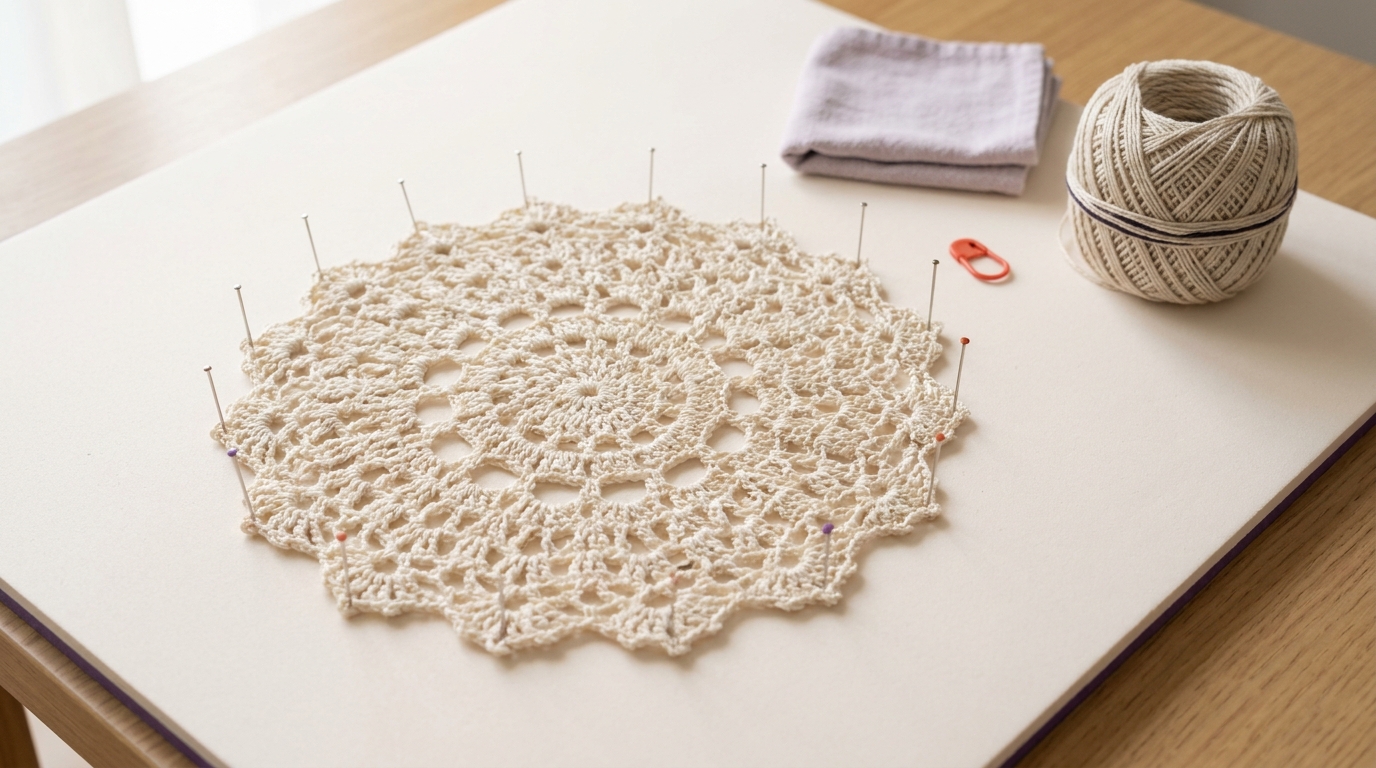
For lace and small motifs, wet-blocking gives the most dramatic improvement in openness and stitch definition: soak the piece fully, press gently between towels to remove excess water, pin each point or edge to a foam mat or blocking board, and leave to dry completely; careful pin placement defines lace points and maintains symmetry
Short wet-block routine for a doily: soak for 10 minutes in lukewarm water with a mild soap if needed, lift and press between towels, spread on a blocking mat, pin each outer point evenly, and allow at least 24 hours to dry depending on humidity; a swatch first shows how much pins should be spaced for best effect The Spruce Crafts blocking guide
Garments and blankets
Larger pieces need support to avoid distortion while drying: for wet blocking, pin at multiple points and use blocking wires along long edges to keep them straight; consider drying garments flat with internal supports under heavy sections to stop gravity from stretching the item while wet. This careful pinning keeps dimensions predictable for wearable items Interweave blocking overview
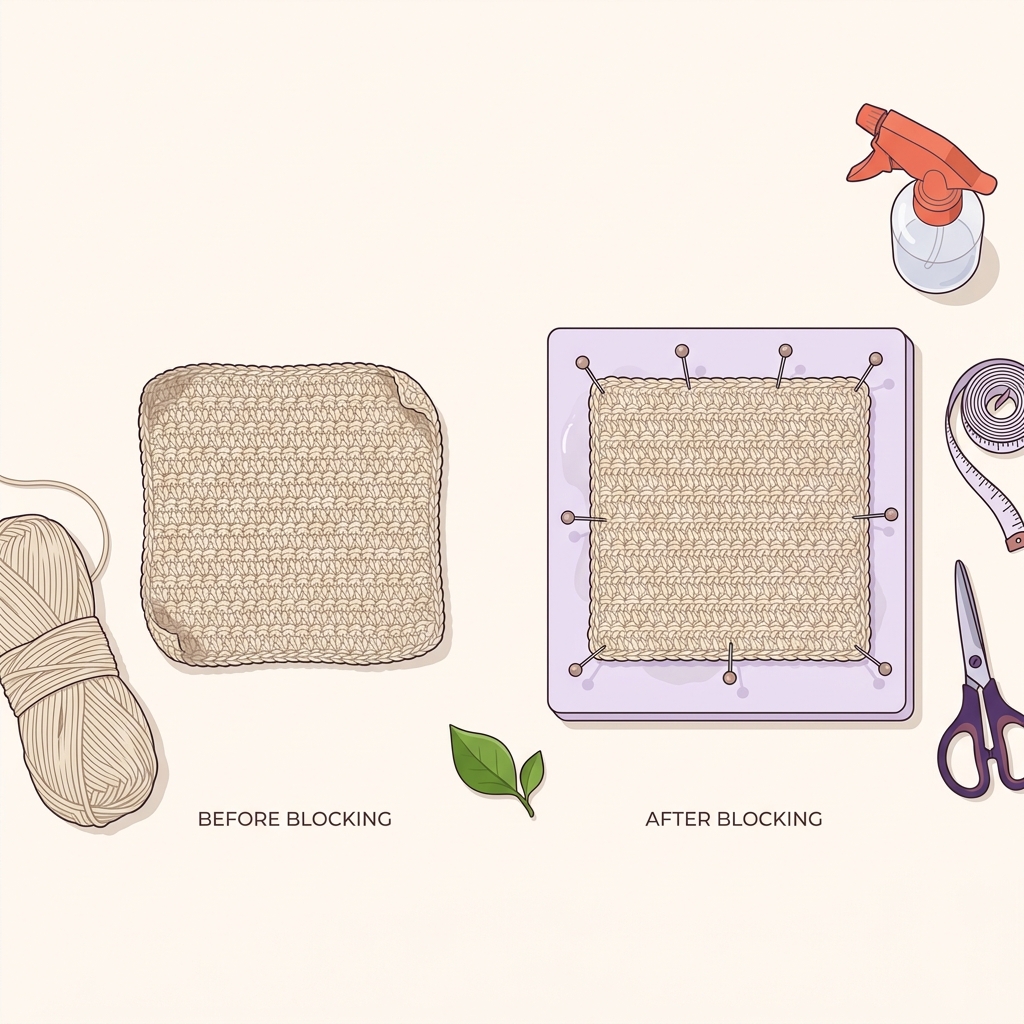
When steam-blocking garments, work in small sections and allow the fabric to relax between passes rather than applying continuous steam across a wide area; this reduces the chance of uneven shaping and helps you nudge seams and hems into the right alignment without overworking delicate stitches. See related notes in the journal.
Acrylic and mixed-fiber care notes
Because acrylic can change permanently with heat, avoid placing a hot iron directly on acrylic fabric; instead use low steam at distance or a spray-and-pin routine and test a swatch before working the whole item. If a pattern includes an acrylic blend, treat the piece according to the most delicate fiber in the mix The Spruce Crafts blocking guide
For mixed fibers, always check the yarn label and, when in doubt, choose the gentlest method that achieves the needed shape and stitch clarity; slow, incremental adjustments are safer than an aggressive single treatment Interweave blocking overview
Common mistakes, troubleshooting and caring for a blocked piece
Typical errors to avoid
Skipping a swatch is the most frequent mistake; without a swatch you cannot predict how a fiber and stitch pattern will relax when treated, so always test your planned blocking method on a sample before committing to the full project Tin Can Knits blocking basics
Do not over-stretch delicate fibers in an attempt to meet a target measurement because overstretched areas can look thin or pull out of pattern once the piece is worn; if the swatch shows large percent change, consider adjusting hook size or pattern pieces instead of forcing the fabric to a measurement that stresses the yarn Interweave blocking overview
When to re-block and how to care for blocked items
Blocking is semi-permanent: the set shape and size usually hold until the item is washed or re-wetted, at which point re-blocking will often be necessary to restore the dimensions; plan laundering and storage with that in mind so you can keep garments looking as intended Tin Can Knits blocking basics
Troubleshooting tips include relaxing an over-stretched border by gently misting and re-positioning pins, or accepting minor size shifts where the fiber structure will not safely support further stretching. If outcomes are uncertain, retest with a swatch using a milder method and document the results to inform future projects The Spruce Crafts blocking guide
Frequently asked questions
Will blocking permanently change my crochet piece?
Blocking sets the shape until the item is re-wetted or washed; you can re-block after laundering to restore dimensions.
Can I steam block acrylic yarn?
Use caution with acrylic; avoid direct high heat and prefer careful low-heat steam at a distance or spray-and-pin methods after testing a swatch.
How much bigger will my project get after blocking?
It depends on fiber and method; measure a blocked swatch and calculate percent change to predict the full project.
Blocking is a useful finishing tool that can improve fit and appearance, but it is not a guesswork step. Test with a swatch, choose the method suited to your fiber, and document what you do so you can repeat a successful routine. With controlled blocking, you can make deliberate choices about size and drape rather than reacting to unexpected growth.
References
- https://www.thesprucecrafts.com/how-to-block-crochet-1499835
- https://www.interweave.com/article/crochet/crochet-blocking-101/
- https://madeinsteps.com/guides/
- https://brianakdesigns.com/all-about-blocking-your-crochet-projects-the-secret-to-a-professional-finish/
- https://doradoes.co.uk/2020/02/22/blocking-explained-when-and-how-to-block-crochet-projects/
- https://www.ilikecrochet.com/daily/crochet-techniques/finishing-techniques/how-to-wet-block-crochet-projects/
- https://madeinsteps.com/library
- https://madeinsteps.com/journal/