
The journal
Can you use a zigzag stitch instead of a serger?
Yes, a zigzag stitch can neatly finish raw fabric edges when you don’t have a serger, with clear limits and simple setup that works on many projects.
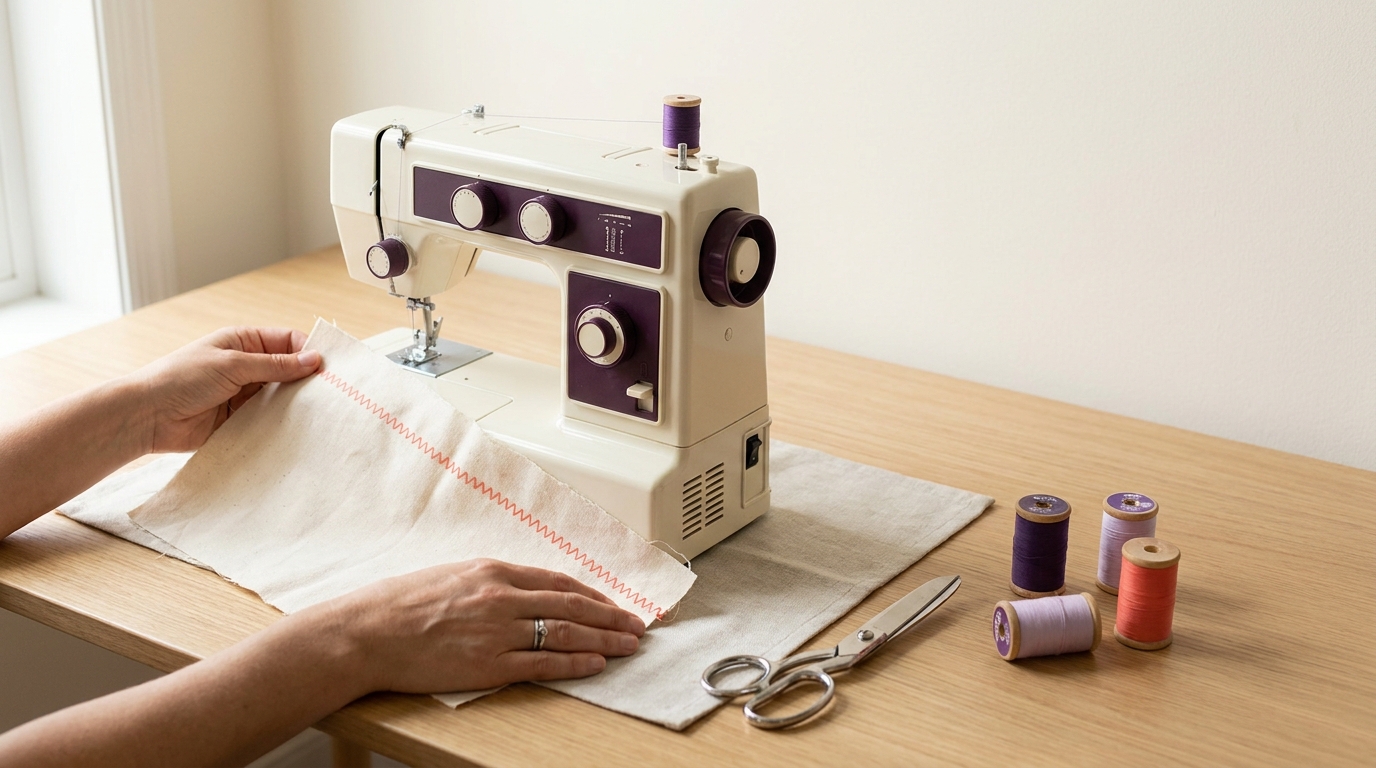
Yes. A regular zigzag stitch can finish raw edges and reduce fraying on many projects when you don’t have a serger. It won’t trim the fabric or form a multi-thread overlock, but it’s a simple, serviceable seam finish if you test on scraps and sew so the right swing of the needle meets the fabric edge (https://tillyandthebuttons.com/blogs/sewing/finishing-seams-zigzag-stitch; https://www.sailrite.com/When-to-Use-Straight-or-Zigzag-Stitch; https://madamsew.com/blogs/sewing-blog/finishing-your-edges?srsltid=AYCX9vKjWjXroye9d2uNmw3HLxxhAh5PkYPP9KvzOMnxXDIqwo0WIfX3).
What a zigzag can and cannot replace
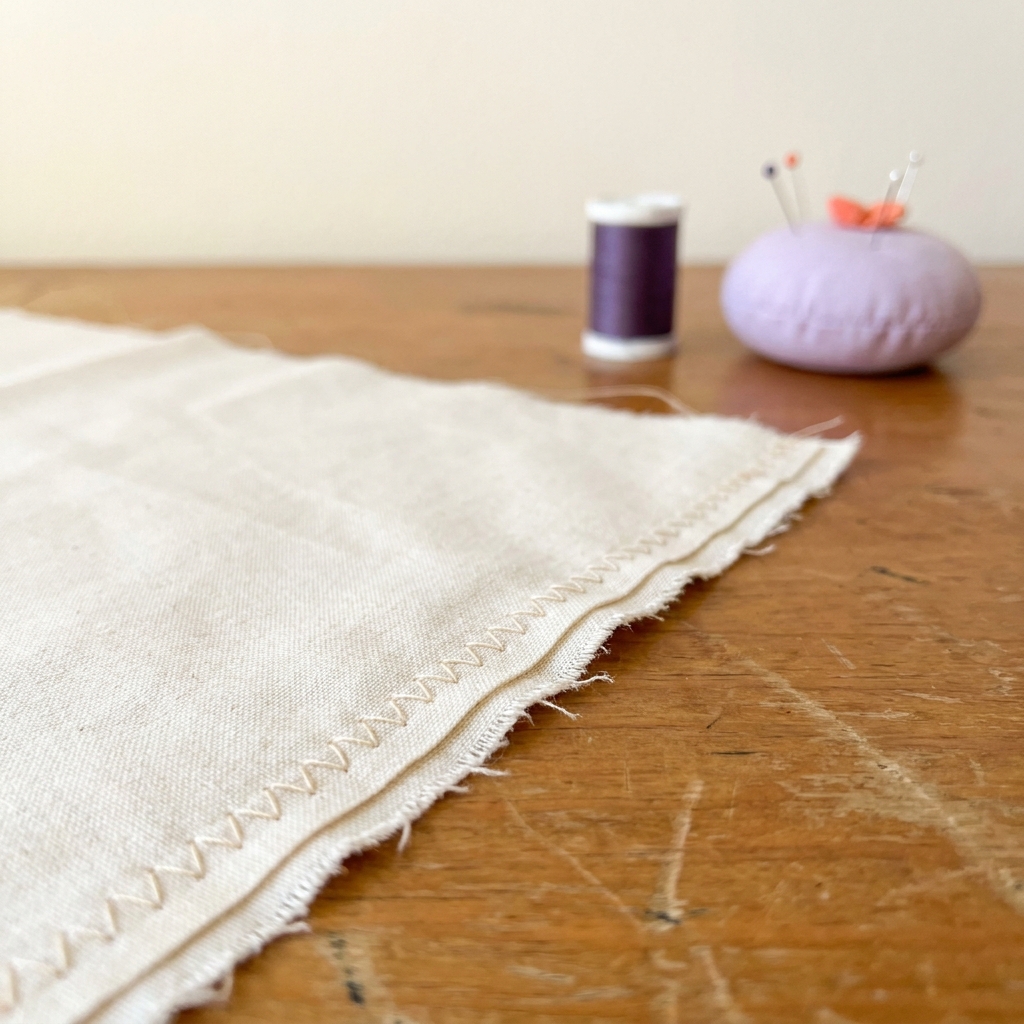
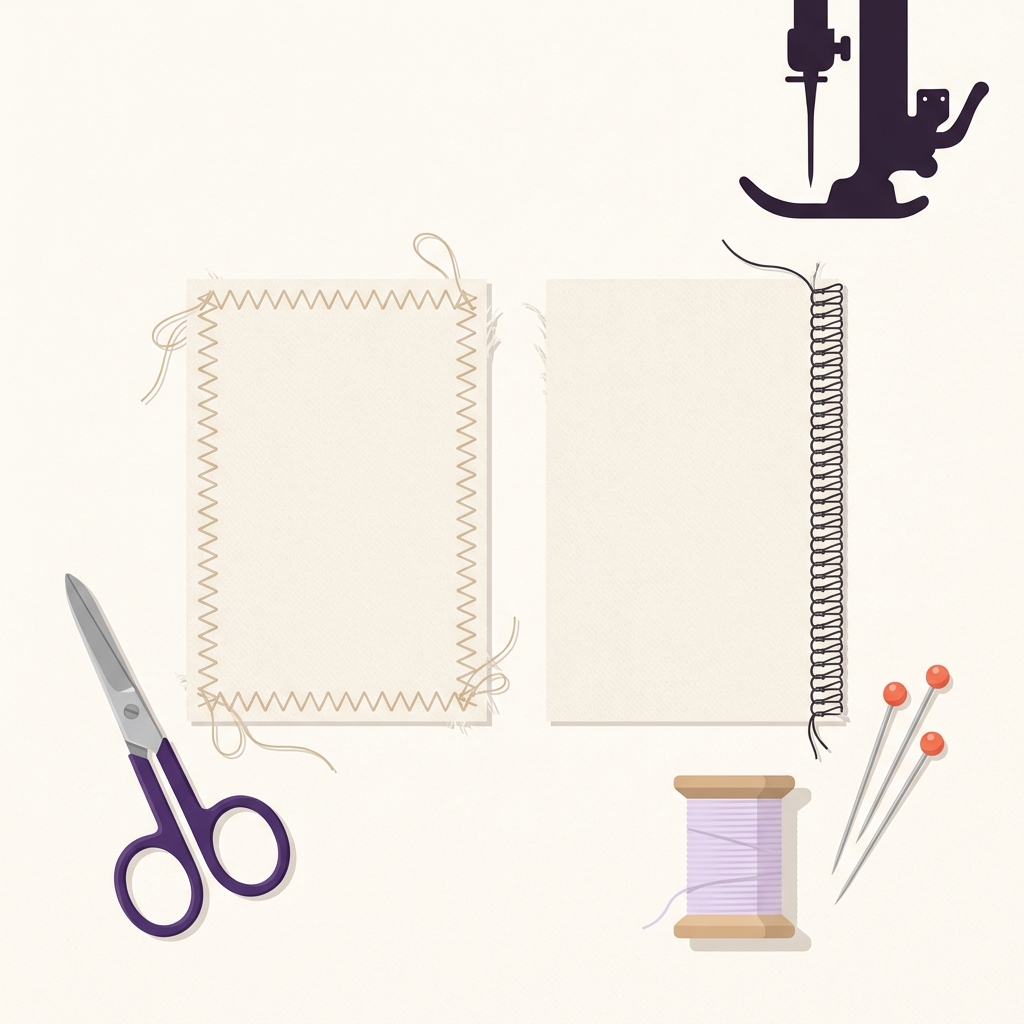
Use a zigzag when you need to enclose a raw edge to curb fraying quickly. Sailrite notes you can sew a zigzag slightly over the cut edge to “enclose” it if you don’t own a serger (https://www.sailrite.com/When-to-Use-Straight-or-Zigzag-Stitch). A zigzag does not cut the edge or replicate the multi-thread wrapped overlock. An overcast (overedge) stitch and foot on a regular machine can mimic the look more closely, but still won’t cut the edge like a serger (https://madamsew.com/blogs/sewing-blog/finishing-your-edges?srsltid=AYCX9vKjWjXroye9d2uNmw3HLxxhAh5PkYPP9KvzOMnxXDIqwo0WIfX3).
Step by step: finish edges with a zigzag
- Sew the seam first, then trim. Leave at least 7 mm (1/4 in) of seam allowance so the zigzag has fabric to catch (https://tillyandthebuttons.com/blogs/sewing/finishing-seams-zigzag-stitch).
- Set a starting stitch. A common starting point is about 2.4-2.5 mm length and 3-3.5 mm width (https://tillyandthebuttons.com/blogs/sewing/finishing-seams-zigzag-stitch). Adjust after a scrap test.
- Fit an overedge/overcast foot if you have one. Its guide helps place the zigzag so the right swing just reaches the fabric edge (https://tillyandthebuttons.com/blogs/sewing/finishing-seams-zigzag-stitch).
- Sew along the edge. Keep the edge aligned to the foot guide so each right swing lands at the very edge. If your machine tangles when backtacking in zigzag, tie thread tails or backtack in straight stitch instead (https://tillyandthebuttons.com/blogs/sewing/finishing-seams-zigzag-stitch).
- Press and inspect. If you prefer, you can zigzag a few millimeters in from the edge and trim close afterward to tidy fuzzier fabrics (https://madamsew.com/blogs/sewing-blog/finishing-your-edges?srsltid=AYCX9vKjWjXroye9d2uNmw3HLxxhAh5PkYPP9KvzOMnxXDIqwo0WIfX3).
When to choose a different finish
Zigzag works on many wovens and stable knits, but very sheer or delicate fabrics can snag or get pulled into feed dogs. In those cases, try French seams or binding, or stabilize with tissue or spray starch while you sew (https://madamsew.com/blogs/sewing-blog/finishing-your-edges?srsltid=AYCX9vKjWjXroye9d2uNmw3HLxxhAh5PkYPP9KvzOMnxXDIqwo0WIfX3; https://www.sewmucheasier.com/how-to-finish-seams-without-an-overlocker/?srsltid=AYCX9vIX1Nqfb7oDUc3hEqn3jPozugWhO01WrmX3CJfoj-Xwau53tI8M). Mock overlock/overcast stitches on your machine are also solid alternatives and are designed to finish edges neatly without cutting (https://www.sewmucheasier.com/how-to-finish-seams-without-an-overlocker/?srsltid=AYCX9vIX1Nqfb7oDUc3hEqn3jPozugWhO01WrmX3CJfoj-Xwau53tI8M; https://madamsew.com/blogs/sewing-blog/finishing-your-edges?srsltid=AYCX9vKjWjXroye9d2uNmw3HLxxhAh5PkYPP9KvzOMnxXDIqwo0WIfX3).
- French seams: fully enclose raw edges on light fabrics (https://www.sewmucheasier.com/how-to-finish-seams-without-an-overlocker/?srsltid=AYCX9vIX1Nqfb7oDUc3hEqn3jPozugWhO01WrmX3CJfoj-Xwau53tI8M).
- Bias bound seams: durable and decorative, good for visible edges (https://www.sewmucheasier.com/how-to-finish-seams-without-an-overlocker/?srsltid=AYCX9vIX1Nqfb7oDUc3hEqn3jPozugWhO01WrmX3CJfoj-Xwau53tI8M).
- Pinking: quick on tightly woven fabrics with minimal fray (https://www.sewmucheasier.com/how-to-finish-seams-without-an-overlocker/?srsltid=AYCX9vIX1Nqfb7oDUc3hEqn3jPozugWhO01WrmX3CJfoj-Xwau53tI8M).
Starter settings that often work
Begin with length 2.4-2.5 mm and width 3-3.5 mm, then adjust to your fabric. On light to medium fabrics, you can finish both seam allowances together; on heavier fabrics or where there is an opening (like a pocket), finish each allowance separately (https://tillyandthebuttons.com/blogs/sewing/finishing-seams-zigzag-stitch). For knits or edges that need give, a zigzag can provide stretch where a straight stitch would pop (https://www.sailrite.com/When-to-Use-Straight-or-Zigzag-Stitch).
Troubleshooting
- Puckering or the fabric gets chewed: Support thin fabric with tissue paper or starch; consider finishing allowances together to add stability (https://madamsew.com/blogs/sewing-blog/finishing-your-edges?srsltid=AYCX9vKjWjXroye9d2uNmw3HLxxhAh5PkYPP9KvzOMnxXDIqwo0WIfX3).
- Stitches fall off the edge: Narrow the width slightly or use an overcast foot’s guide to keep the right swing right on the edge (https://tillyandthebuttons.com/blogs/sewing/finishing-seams-zigzag-stitch).
- Backtacking knots up: Tie thread tails or backtack on a straight stitch at each end (https://tillyandthebuttons.com/blogs/sewing/finishing-seams-zigzag-stitch).
Quick zigzag-as-serger setup checklist
Try it on a simple project
Practice on straight seams first. For example, finish the inside seams on a basic pillow cover after sewing the panels together: Sew an envelope pillowcase: measure the pillow first. If your project also needs structure, see how interfacing choices affect seam bulk: How to choose interfacing: woven, nonwoven, fusible or sew-in.
FAQ
Will a zigzag hold on stretchy fabrics?
Often, yes. Zigzag forms a seam that can elongate with the fabric, which helps prevent popped stitches on stretch materials (https://www.sailrite.com/When-to-Use-Straight-or-Zigzag-Stitch). Always test on a scrap and adjust width/length.
Do I need a special foot?
No, but an overedge/overcast foot makes it easier to land the zigzag right at the edge and keep the fabric flat (https://tillyandthebuttons.com/blogs/sewing/finishing-seams-zigzag-stitch).