
The journal
Should I press seams open or to one side? A quick quilting guide
Direct, practical guidance on when to press quilt seams to one side or open, with pros, cons, and how-to steps you can use on your next block.
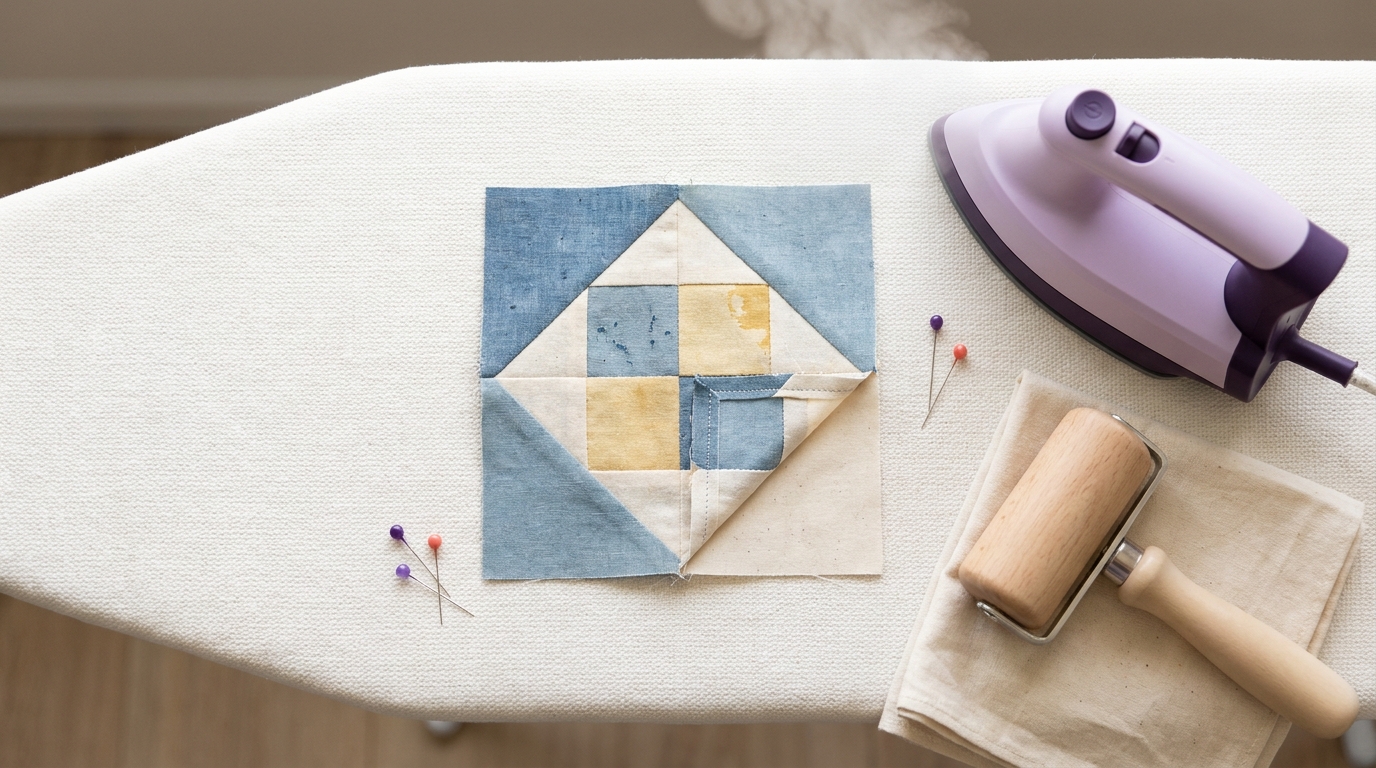
Short answer: use both. Press most routine patchwork seams to one side for easy nesting and reliable stitch-in-the-ditch. Switch to pressing open where several seams meet and you need to spread bulk for a flatter block. Many quilters mix methods within one project, choosing what each seam needs https://www.polkadotchair.com/quilting-101-should-you-press-seams-open-or-closed/. If you plan to stitch in the ditch, avoid areas with open seams, since that can stress the piecing stitches https://thecraftyquilter.com/2014/01/lets-talk-pressing-seams-open-vs-to-the-side/.
When to press to one side
Pressing to one side is a common default for piecing because:
- You can nest adjoining seams for quick, accurate matching at intersections https://thecraftyquilter.com/2014/01/lets-talk-pressing-seams-open-vs-to-the-side/ https://www.polkadotchair.com/quilting-101-should-you-press-seams-open-or-closed/.
- It supports stitch-in-the-ditch quilting because the seam “ditch” is defined and the stitches are protected by fabric https://thecraftyquilter.com/2014/01/lets-talk-pressing-seams-open-vs-to-the-side/ https://www.polkadotchair.com/quilting-101-should-you-press-seams-open-or-closed/.
Trade-offs: pressing to one side can add bulk where many seams stack, and that ridge can slightly influence block thickness. To reduce show-through on pale fabrics, press toward the darker fabric when it still allows nesting and good joins https://geekybobbin.com/pressing/.
Decide open vs to one side on this seam
When to press seams open
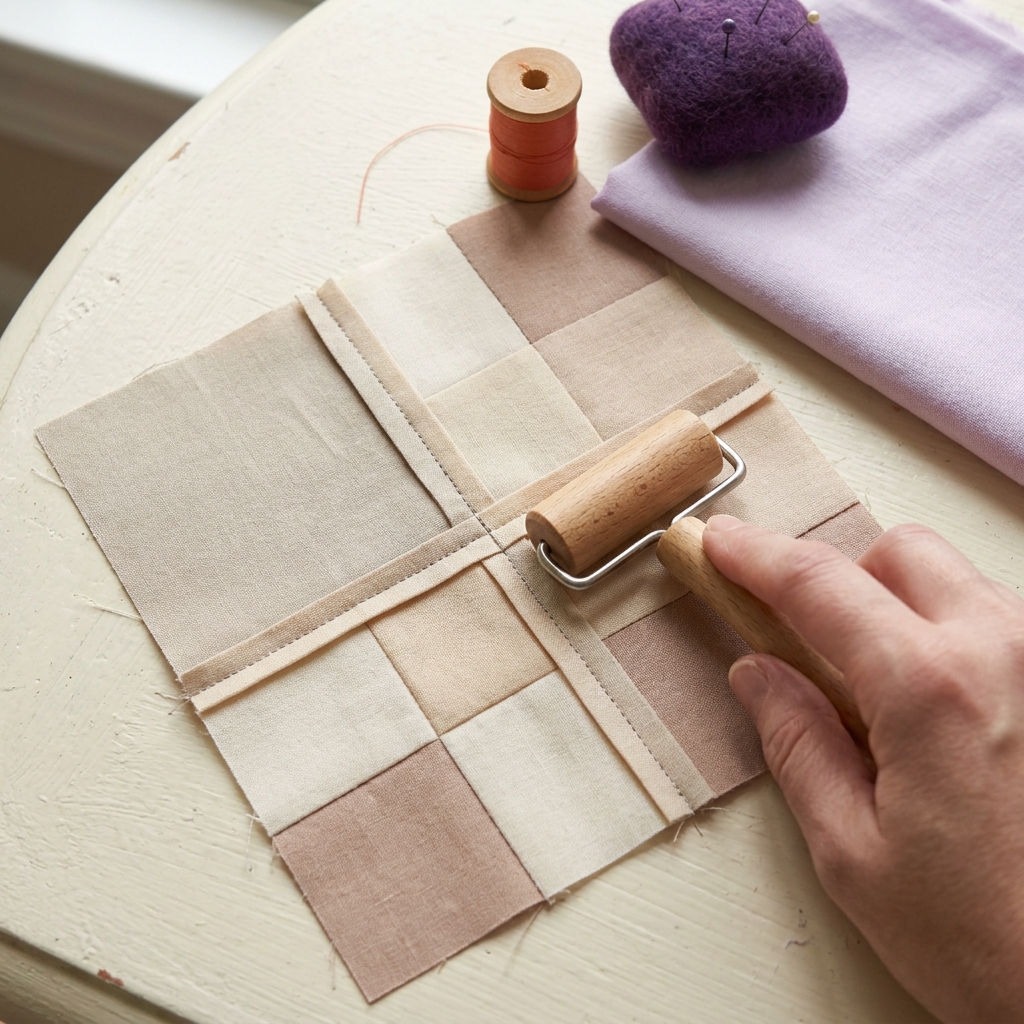
Pressing seams open spreads layers evenly and helps dense intersections lie flatter. It can make free-motion quilting over complex areas feel smoother because the bulk is distributed https://www.polkadotchair.com/quilting-101-should-you-press-seams-open-or-closed/. Many makers use this selectively at busy junctions or in intricate blocks to improve flatness https://geekybobbin.com/pressing/ https://www.loandbeholdstitchery.com/blogs/lo-and-behold/6-tips-for-flat-seams?srsltid=AYCX9vKODPnNnWPl7yIH6qZ7Q27PD5dVVv8_A8-Tpj-2iBMpkHm8o5DN.
Trade-offs: you lose the ability to nest, so precise matching can take more pinning https://www.polkadotchair.com/quilting-101-should-you-press-seams-open-or-closed/. Also avoid stitch-in-the-ditch directly on open seams, since quilting right on the seam line can stress the piecing stitches https://thecraftyquilter.com/2014/01/lets-talk-pressing-seams-open-vs-to-the-side/. Some testing and experience shared by quilters suggests open seams may be more vulnerable if heavily stressed, which is another reason to reserve them for bulk-prone spots https://quiltwithmarcibaker.com/seams-pressed-open-can-be-a-nightmare/.
How to press for flatter, truer blocks
Press, don’t iron
Press straight down with the iron rather than sliding side to side, which can stretch fabric and distort bias edges. This simple habit helps blocks stay square https://geekybobbin.com/pressing/.
Set the seam first
Before opening a seam or turning it to one side, give the stitched seam a quick press as sewn. This “sets the seam,” relaxing fibers so allowances move cleanly and lie flatter https://geekybobbin.com/pressing/.
Then choose your direction
- To one side: open the patchwork, gently roll the allowance fully to the chosen side, and press. For pale fabrics, pressing toward the darker fabric can prevent shadowing https://geekybobbin.com/pressing/.
- Open: spread allowances with your fingers or a tool, then press along the seam line in short sections for control. Many quilters use this at bulky intersections https://www.loandbeholdstitchery.com/blogs/lo-and-behold/6-tips-for-flat-seams?srsltid=AYCX9vKODPnNnWPl7yIH6qZ7Q27PD5dVVv8_A8-Tpj-2iBMpkHm8o5DN.
Reduce bulk smartly
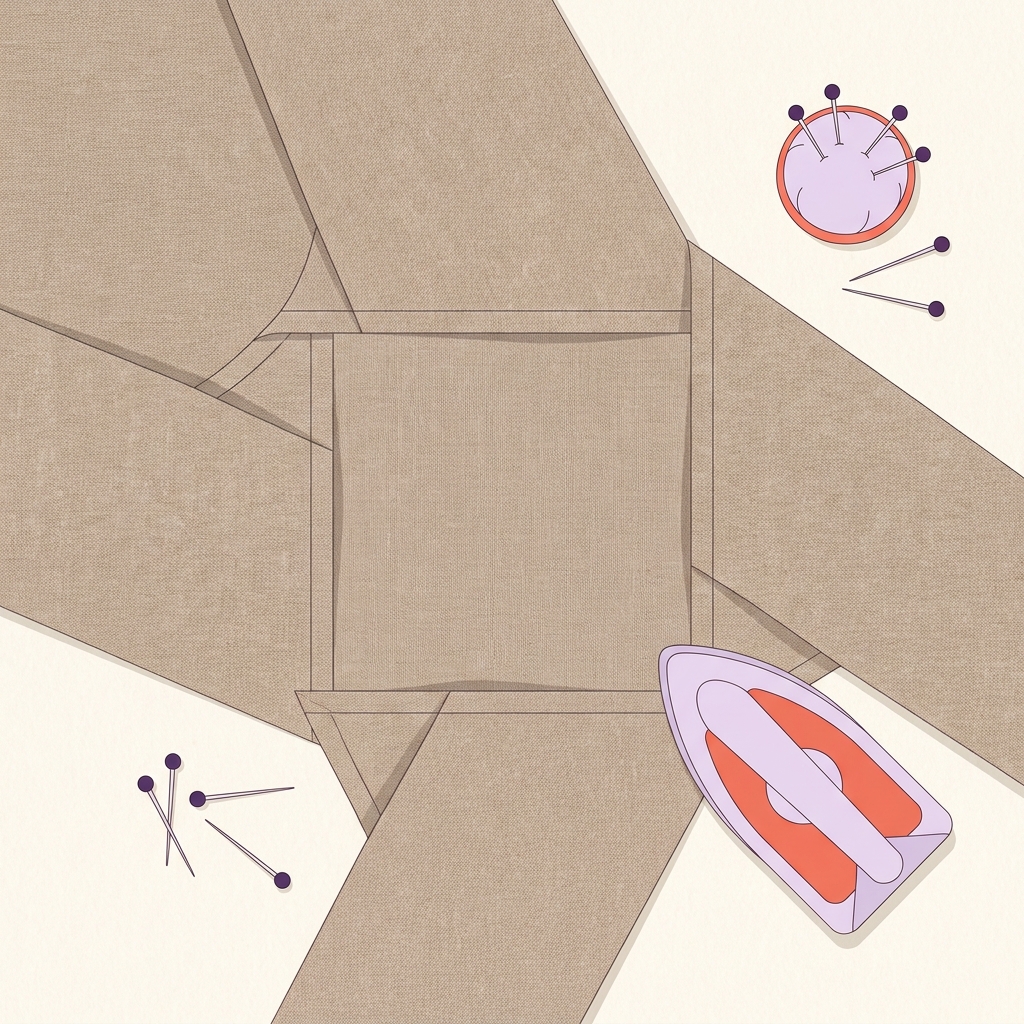
If multiple seams meet, consider spinning/twirling the intersection when pressing to one side to distribute layers, or press that junction open if it’s still thick https://geekybobbin.com/pressing/.
Quick scenarios
- Nine-patch or other grid blocks: press sub-seams to one side in alternating directions so rows and columns nest. If the center stacks up, press just that intersection open for flatness https://www.polkadotchair.com/quilting-101-should-you-press-seams-open-or-closed/ https://geekybobbin.com/pressing/.
- Planning to stitch in the ditch around a motif: keep those particular seams pressed to one side so you have a defined ditch and protected stitches https://thecraftyquilter.com/2014/01/lets-talk-pressing-seams-open-vs-to-the-side/.
- Complex block centers: press open where several allowances converge to spread bulk and create a smoother quilting surface https://www.polkadotchair.com/quilting-101-should-you-press-seams-open-or-closed/.
Related on Made in Steps
- How to choose interfacing: woven, nonwoven, fusible or sew-in
- What is the best way to trace pattern pieces onto fabric? A practical step by step guide

FAQ
Is pressing open always weaker?
Open seams can be more vulnerable if stressed and are not suitable for stitch-in-the-ditch. Many quilters use open pressing selectively for bulky spots and keep routine seams to one side for strength and nesting https://quiltwithmarcibaker.com/seams-pressed-open-can-be-a-nightmare/ https://thecraftyquilter.com/2014/01/lets-talk-pressing-seams-open-vs-to-the-side/.
Can I mix both methods in one quilt?
Yes. It’s common to press most seams to one side and switch to open only at bulky intersections or where a flatter surface is important https://www.polkadotchair.com/quilting-101-should-you-press-seams-open-or-closed/.
Related guides
Product options for this topic
As an Amazon Associate I earn from qualifying purchases. These are researched options, not hands-on test results. Check the exact size or model, current price and availability on Amazon.
| Product option | Fit and limits to check | Retailer |
|---|---|---|
| OLFA RTY-2/DX 45 mm rotary cutter | A rotary cutter for fabric cutting on a suitable mat. Keep the blade guarded between cuts and choose a grip that feels secure. | View on Amazon |
| Fiskars 18 × 24-inch cutting mat, Gray | A reusable cutting surface for fabric and craft layouts. Check your table space and store it flat away from heat. | View on Amazon |
Sources and further reading
- Quilting 101: Should You Press Your Seams Open or to the Side?
- Let's talk: Pressing seams open vs. to the side - The Crafty Quilter
- Press for Success! The ULTIMATE guide to ironing quilt blocks – the geeky bobbin
- 6 Tips for Flat Quilt Seams | Lo & Behold Stitchery
- Seams Pressed Open? Could be a nightmare! – Quilt with Marci Baker