
The journal
Ironing vs pressing fabric: the real difference and when to use a pressing cloth
Understand the motion-and-purpose difference between ironing and pressing, plus exactly what you can use as a pressing cloth and when to reach for one.
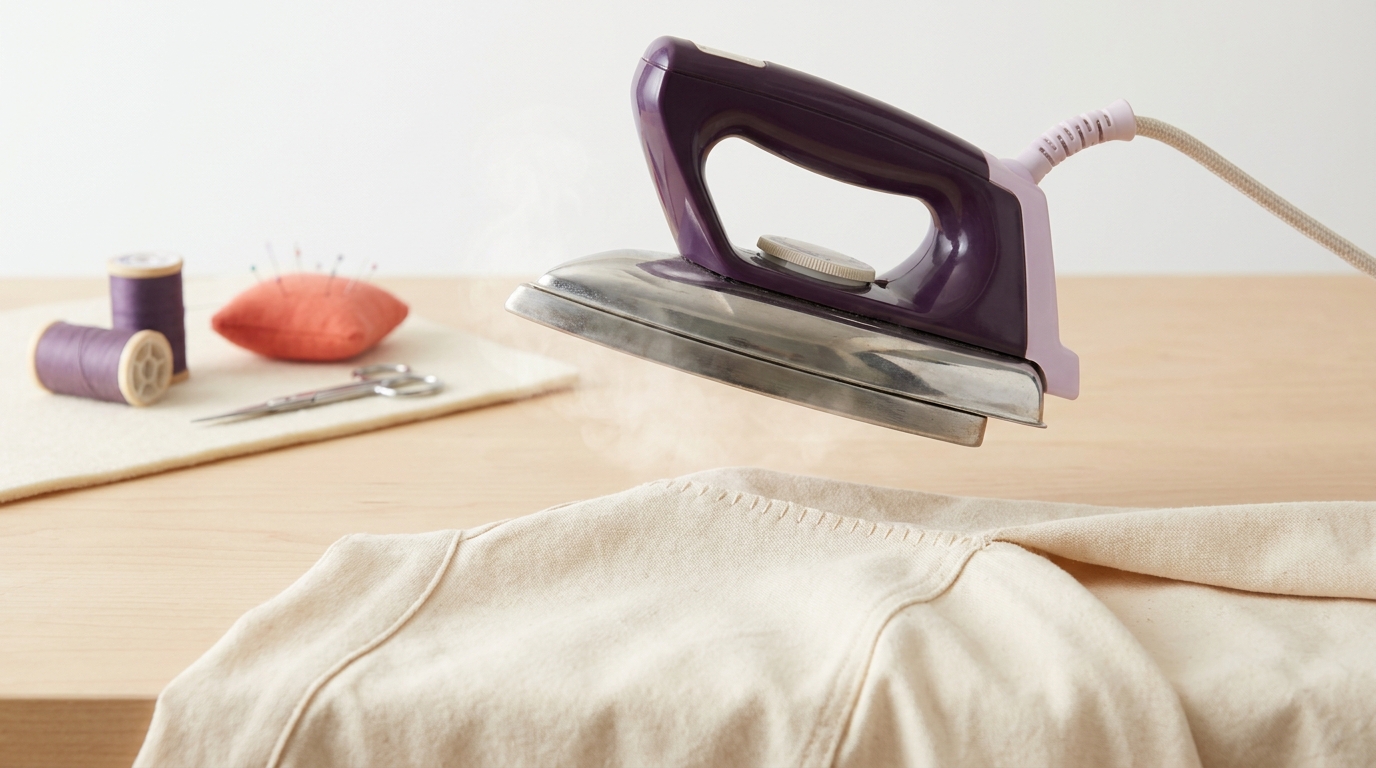
Ironing moves the hot soleplate back and forth to smooth broad wrinkles; pressing lowers and lifts the iron without sliding to set seams, creases or shape a small area. Use a pressing cloth whenever you need to protect delicate fibers or prevent shine while pressing or ironing sensitive spots (UF/IFAS: Ironing versus Pressing).
Pressing vs ironing at a glance
According to the University of Florida Extension, ironing removes wrinkles by sliding a hot iron across the fabric, while pressing means lifting and setting the iron down on a specific area without movement to smooth and shape during construction (UF/IFAS: Ironing versus Pressing). Always match heat to the care label. For blends, use the setting for the most heat-sensitive fiber (UF/IFAS: Ironing versus Pressing).
What can I use as a pressing cloth?
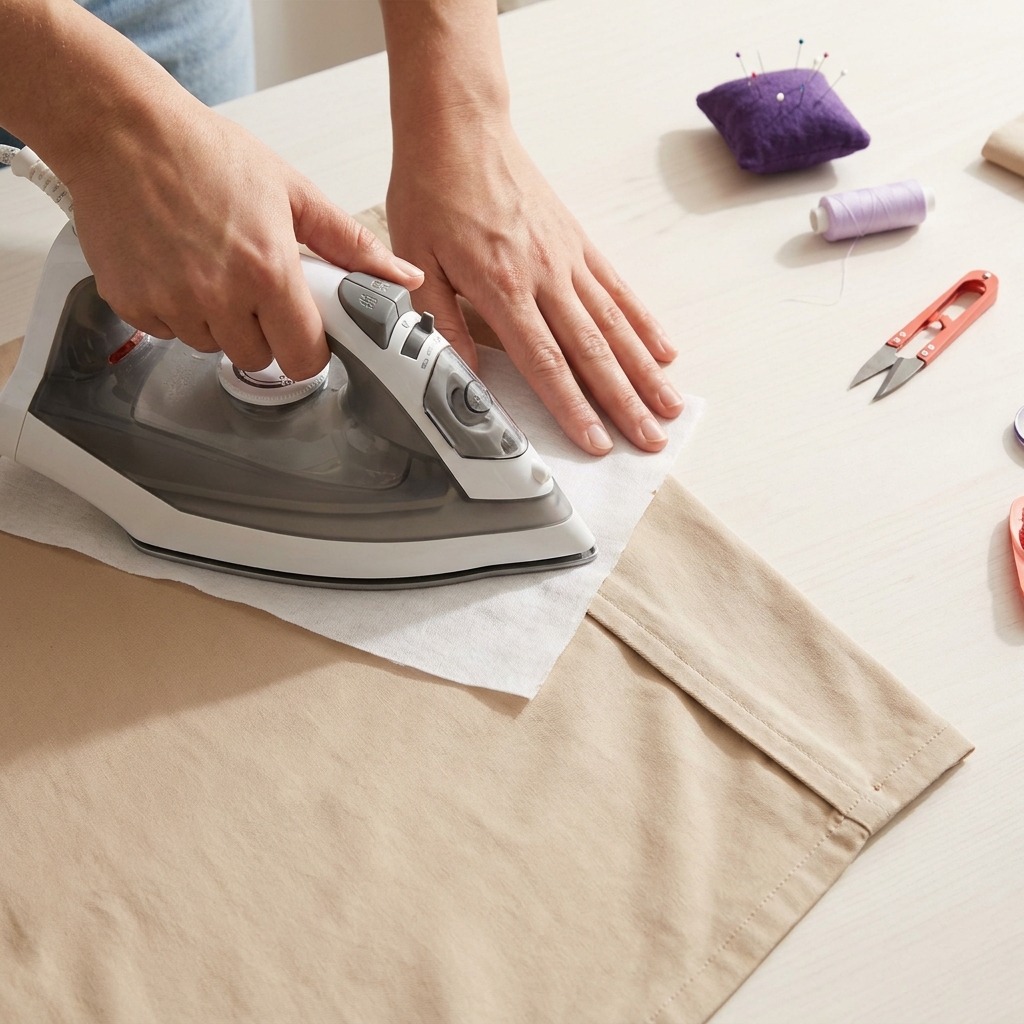
A pressing cloth is a thin layer placed between iron and fabric to reduce shine, protect against scorching or melting, and keep any inks or coatings from transferring to your iron (UF/IFAS: Ironing versus Pressing). Practical options include:
- Clean cotton muslin or a cotton handkerchief for everyday protection (Megan Nielsen: Ironing and pressing).
- Silk organza as a see-through pressing cloth that lets you see exactly what you are pressing (Closet Core: Essential pressing tools).
Moisture helps only where the care label permits it. If steam requires more heat than the fabric allows, a damp pressing cloth may be an option at the permitted temperature; test first and avoid moisture on textiles prone to water marks (UF/IFAS: Ironing versus Pressing). For fabric-by-fabric pointers, see our guide Should a pressing cloth be wet or dry?
How to press without stretching or leaving marks
Use lift-and-lower motions rather than gliding. Keep pressure light, often using only the edge or tip of the soleplate for precision. Press each seam or dart before it is crossed by another seam, work with the fabric grain to avoid stretching, and avoid overpressing which can imprint ridges. Do not press over pins; remove them or press around them. Cover fasteners like zippers or hooks to protect both fabric and iron (UF/IFAS: Ironing versus Pressing).
How to iron efficiently and safely
Lay the piece flat on a stable, padded surface and glide the iron smoothly in overlapping passes to remove wrinkles. You can lightly dampen the item or use steam if the care label allows; handle the garment as little as possible afterward to avoid creating new creases (UF/IFAS: Ironing versus Pressing). Always select the temperature for the actual fiber content and test on a scrap first if uncertain (UF/IFAS: Ironing versus Pressing).
Quick decisions: iron or press?
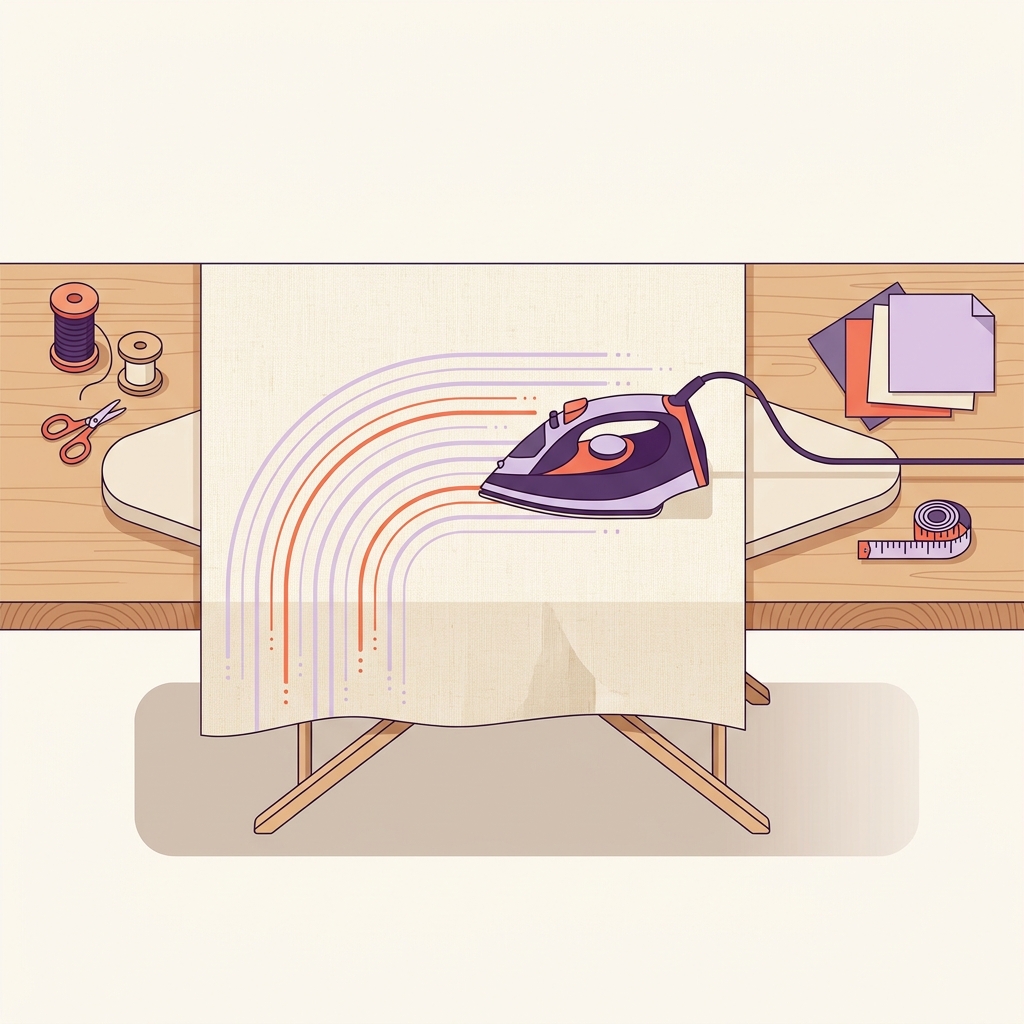
- Choose ironing for broad, overall smoothing of shirts, linens and large panels.
- Choose pressing for seams, darts, pleats and localized shaping during construction.
- Whenever sheen, melting risk or sensitive prints are possible, place a pressing cloth between the iron and the fabric (UF/IFAS: Ironing versus Pressing).
Before you press or iron: quick safety and quality checklist
Short FAQs
Do I need steam to press?
No. Pressing works with heat and light pressure; add moisture only if the care label allows. If steam requires excessive heat, consider a damp cloth only where the care label permits moisture, at a suitable temperature (UF/IFAS: Ironing versus Pressing).
Can a pressing cloth prevent shiny marks?
Yes. A pressing cloth can reduce shine and direct contact, but does not make excessive heat safe or override a do-not-iron label. Keep the iron away from heat-sensitive prints and fasteners unless their instructions explicitly allow pressing (UF/IFAS: Ironing versus Pressing).