
The journal
Should a pressing cloth be wet or dry? Fabric-by-fabric guidance
Whether to dampen a pressing cloth depends on the fiber. Use light moisture for cotton and linen, steam with a press cloth for wool, and go dry or barely damp for delicate silks. Clear steps, mistakes to avoid, and a quick checklist.
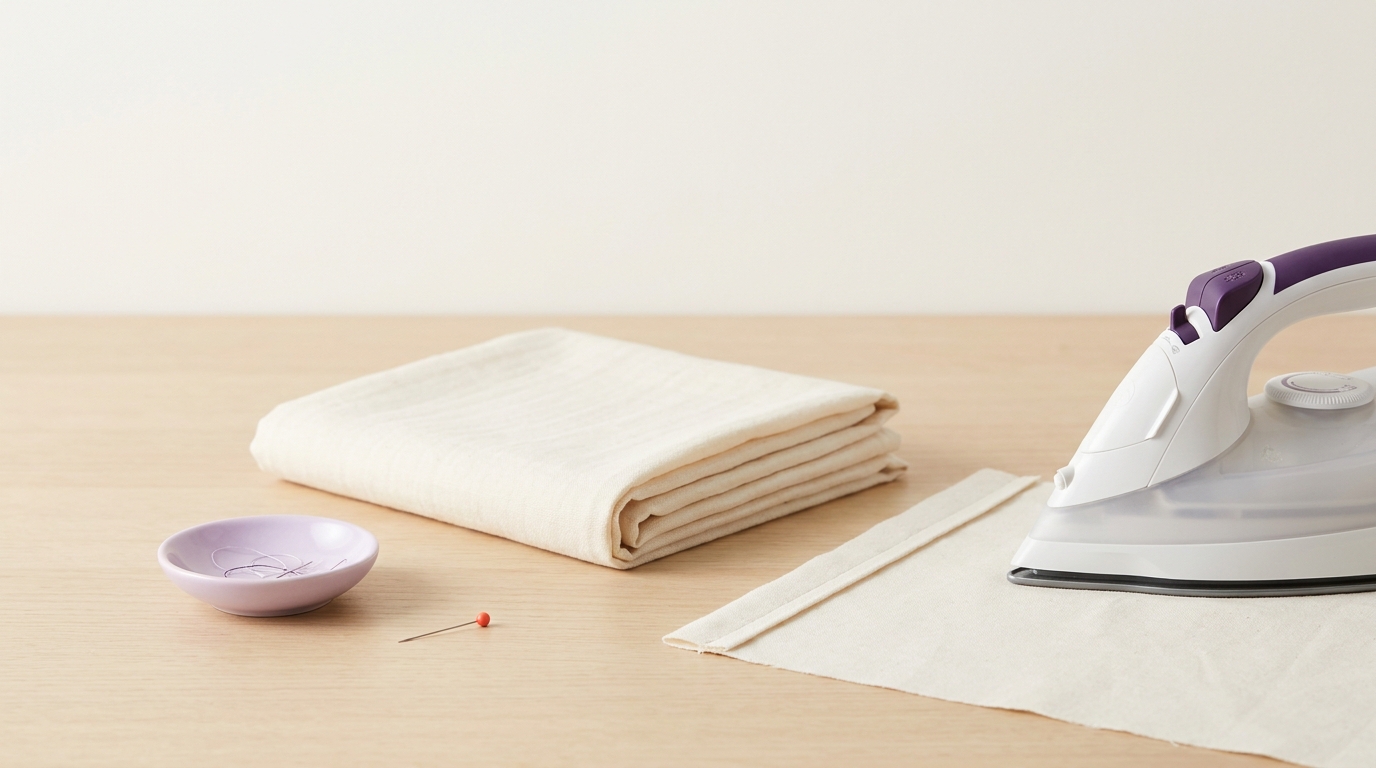
Short answer: it depends on the fabric. Use a lightly damp pressing cloth for cotton and linen when you want stronger crease removal, steam through a press cloth for wool, and keep the cloth dry or only barely moist for delicate silks to avoid water spots. Always test first and set the iron for the most heat-sensitive fiber in the item (NMSU, UF/IFAS, UGA).
Why a press cloth matters and how moisture changes results
A press cloth is a thin barrier that spreads heat and moisture, reducing shine, scorching, and melting, and it also protects your iron from any residues that could transfer from the fabric (UF/IFAS). Moisture can come from a steam iron, a lightly dampened press cloth, or a fine spritz of water, but it must be controlled and tested on a scrap first (UF/IFAS). How much heat, moisture, and pressure you use should be guided by fiber content, texture, and any finishing on the fabric (NMSU).
Fabric-by-fabric: wet or dry press cloth?
Cotton and linen
Use steam or a lightly damp pressing cloth for effective wrinkle and crease removal on cotton. For linen, use the highest heat appropriate for linen with a damp press cloth or steam, preferably pressing on the wrong side to prevent shine (NMSU). If you are fusing interfacing to cotton or linen, review how different interfacings behave under heat and steam before you start (How to choose interfacing).
Wool
Do not put a hot soleplate directly on wool. Use steam with a press cloth; a damp press cloth can help shrink out ease in sleeve caps, curved seams, and hems. UGA also advises pressing wool with a steam, not dry, iron and using a press cloth on the wrong side when possible (NMSU, UGA).
Silk
For sheer silk, use a dry iron only. For heavier silk, use light steam with a press cloth at a low setting, and avoid overwetting to reduce the risk of water spotting, which silk is prone to (NMSU, UGA).
Rayon
Use a moderately warm iron with a press cloth and avoid steam directly on the fabric, which can distort or spot some rayons (NMSU).
Polyester and blends
Set the iron for the fiber needing the lowest temperature, and use a press cloth. Steam and a dampened press cloth can help smooth seams and set creases, but keep the temperature low and test first (NMSU).
How to prepare and use a press cloth safely
Choose and dampen the cloth
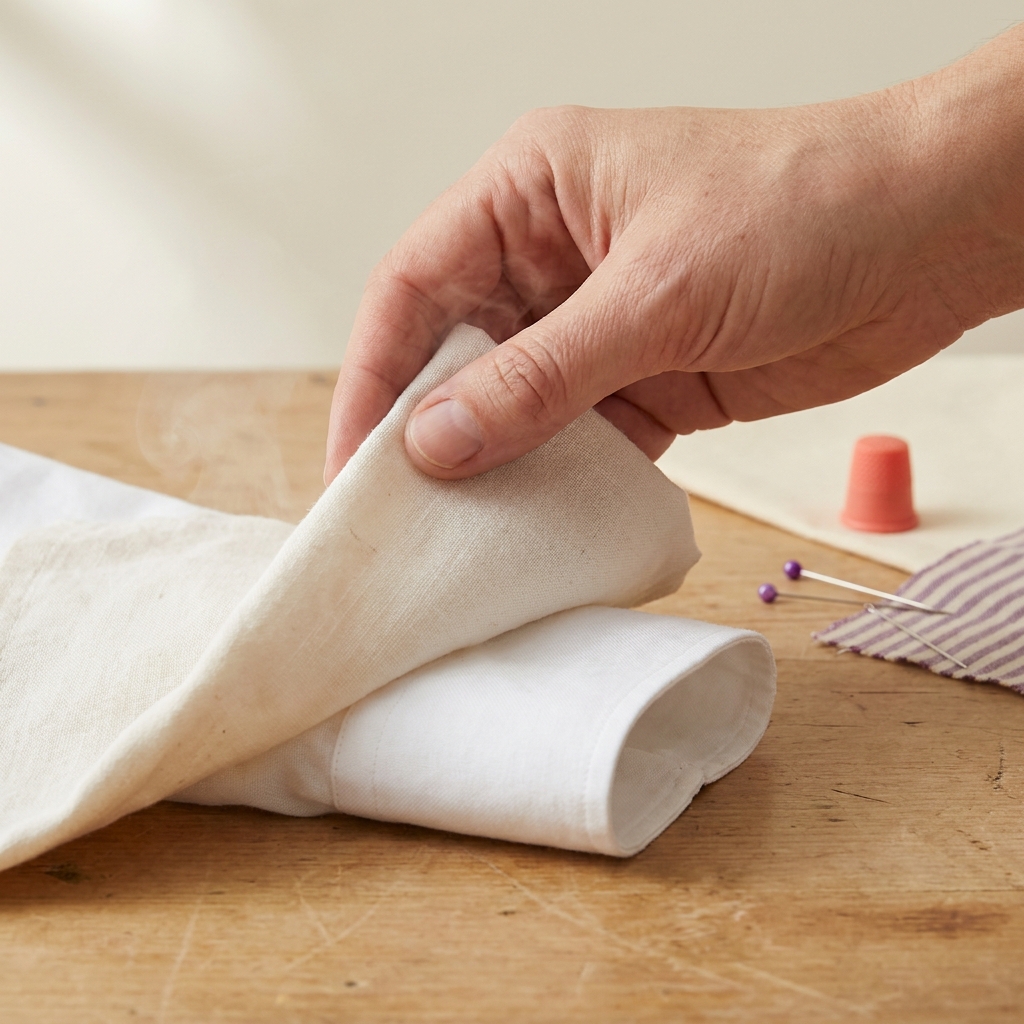
Pick a clean, plain white cotton muslin or similar lightweight cotton so there is no risk of dye transfer. To dampen, wet it and wring thoroughly until it is only lightly moist, not dripping. This gives controlled moisture without overwetting, which can leave marks on sensitive fibers like silk (UF/IFAS, UGA).
Set temperature and press, don’t iron
Match the iron setting to the fabric (or the most heat-sensitive fiber in the blend) and test on a scrap. For best results, lower and lift the iron rather than sliding it, and work from the wrong side when possible; use a press cloth whenever you must press on the right side (NMSU, UF/IFAS). If you’re preparing fabric for pattern work, see practical transfer methods that won’t add moisture marks (Transfer patterns to fabric).
Match cloth moisture to your fabric
Quick scenarios
Cotton shirt
Lightly dampen the press cloth or use steam, press firmly with a lift-and-lower motion, and finish each area until dry to lock in the smoothness (NMSU).
Wool trousers
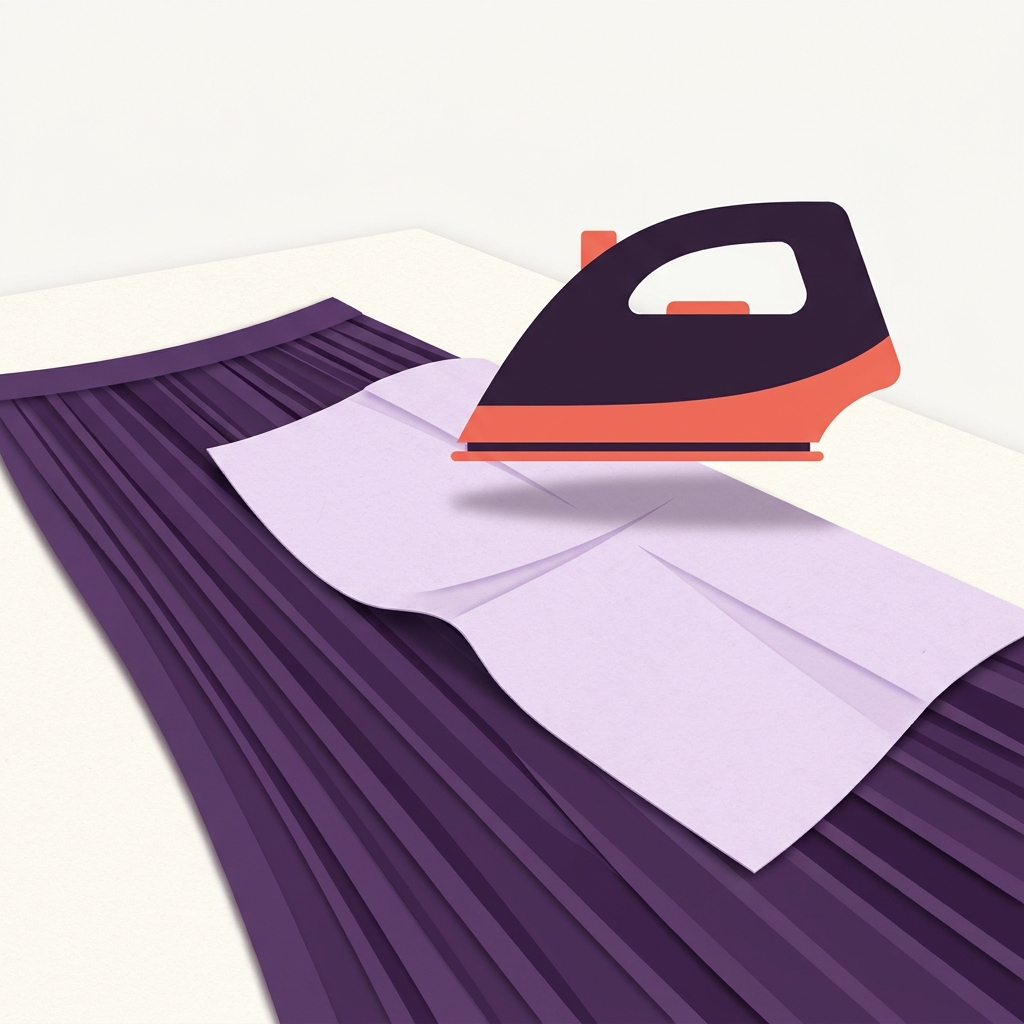
Lay a press cloth on the fabric, add steam, and lift the iron. Use a slightly damp cloth to shrink ease at hems or crease lines as needed (NMSU).
Silk blouse
For sheer silk, use a dry iron with a press cloth at low heat. For heavier silk, introduce only light steam through the cloth and avoid saturating to prevent water spots (NMSU, UGA).
Common mistakes to avoid
- Overwetting the cloth or garment, which can cause water marks on sensitive fibers and finishes; control moisture and test first (UF/IFAS, UGA).
- Sliding the iron on delicate or shaped areas; press using a lift-and-lower motion to avoid stretching and shine (NMSU).
- Pressing over pins or hardware; they can mark fabric or scratch the soleplate (UF/IFAS, NMSU).
FAQ
Do I ever use a soaking-wet press cloth?
No. Keep moisture controlled. Use a lightly damp cloth or add steam as needed and test first; fabric, weave and finish determine how much moisture is safe (UF/IFAS, NMSU).
When should I always use a press cloth?
Whenever pressing on the right side, on wool, and on heat-sensitive or glossy surfaces, to avoid shine and scorching (NMSU, UF/IFAS).

Start with the care label, test on a scrap, and match moisture to your fiber. Lightly damp for cotton and linen, steam with a press cloth for wool, and dry or barely damp for most silks keeps surfaces protected and results crisp.