
The journal
What is the standard seam allowance for sewing?
A clear answer on seam allowance standards, with common defaults for garments, quilting and bags, how to measure accurately, and when to choose a different width.
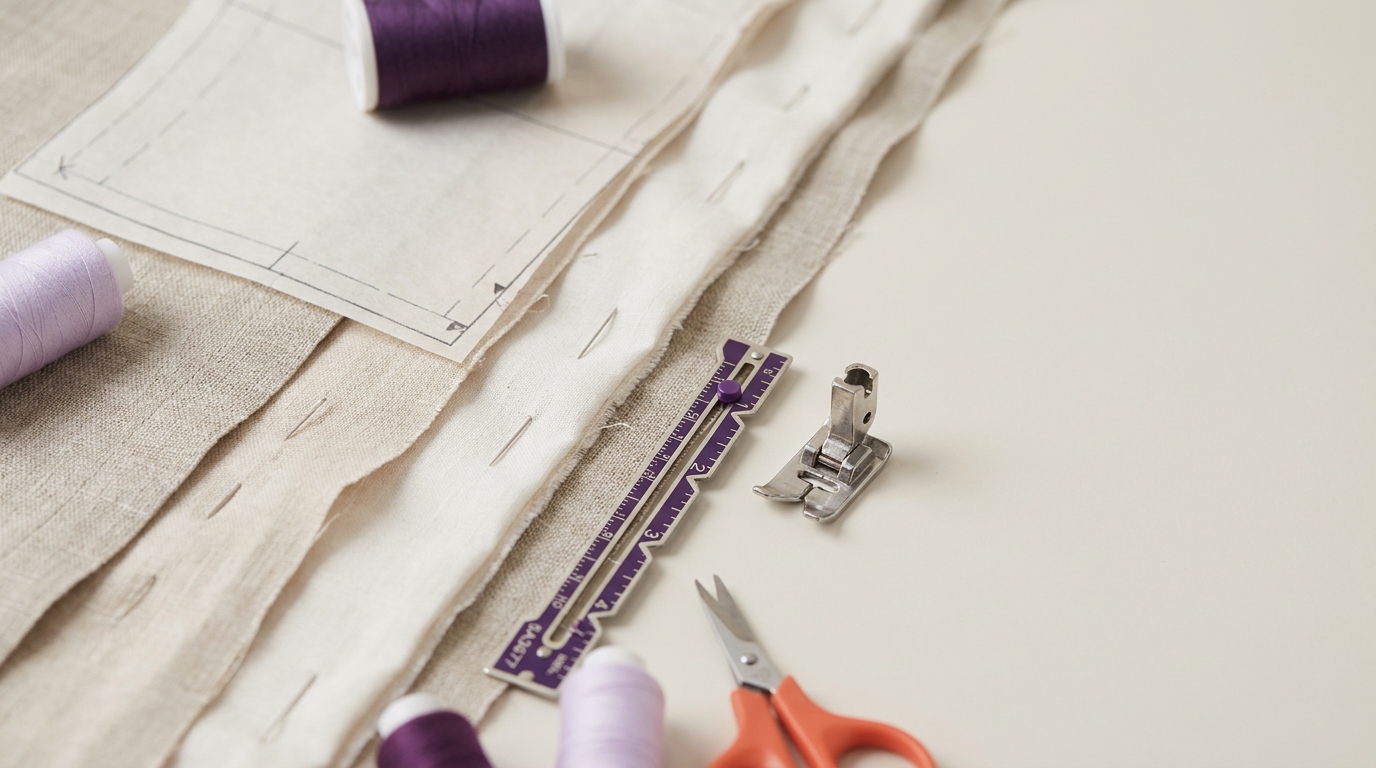
There isn’t one universal standard for all sewing. Always use the allowance specified by your pattern. Common defaults are 5/8 in (about 16 mm) for many commercial garment patterns, 1/4 in (6 mm) for quilt piecing, 1 cm (about 3/8 in) on many indie/plain seams, and 1/2 in (12 mm) for many bags and accessories. Check your instructions for any seam-by-seam variations. Threadistry: What is seam allowance? and The Sewing Retreat: Seam and hem allowances
Why seam allowance matters
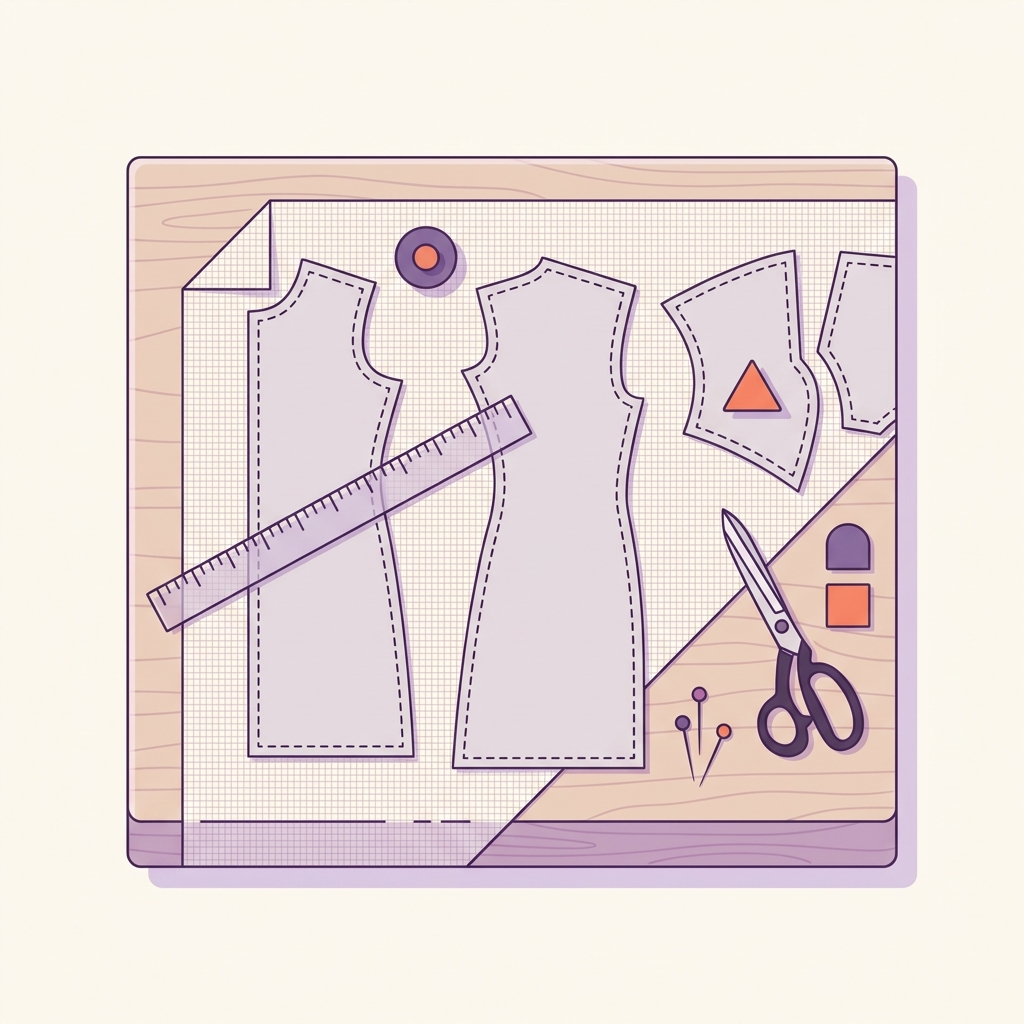
Seam allowance is the distance from the cut edge to the stitching line. It affects fit, durability, finishing options and whether you can alter a seam later. Mixing the wrong widths can change finished size and misalign details, so accuracy is essential. Threadistry: What is seam allowance?
Common defaults by project type
Garments: commercial patterns
Major commercial pattern brands commonly use 5/8 in (about 16 mm). This leaves room for fitting and a variety of seam finishes. Always check your pattern; some seams will vary from the general rule. Threadistry: What is seam allowance? and In the Folds: Sewing seam allowance
Garments: indie or self-drafted patterns
Many indie drafts use 1 cm (about 3/8 in) for plain seams to reduce bulk and suit modern construction. Heavier-duty or enclosed seams often need more. The Sewing Retreat: Seam and hem allowances
Knits
Knit projects frequently use smaller allowances, often around 1/4 to 3/8 in, especially when constructed on a serger/overlocker. Among Brenda’s Quilts: Seam allowance basics
Quilting and patchwork
Quilt piecing is typically sewn at 1/4 in (6 mm) so blocks finish to the intended size. Threadistry: What is seam allowance?
Bags and accessories
Bag making commonly uses 1/2 in (12 mm) to manage multiple layers and fraying edges. Confirm in your pattern. Threadistry: What is seam allowance?
Measure and sew the stated allowance accurately
Use your machine’s guides
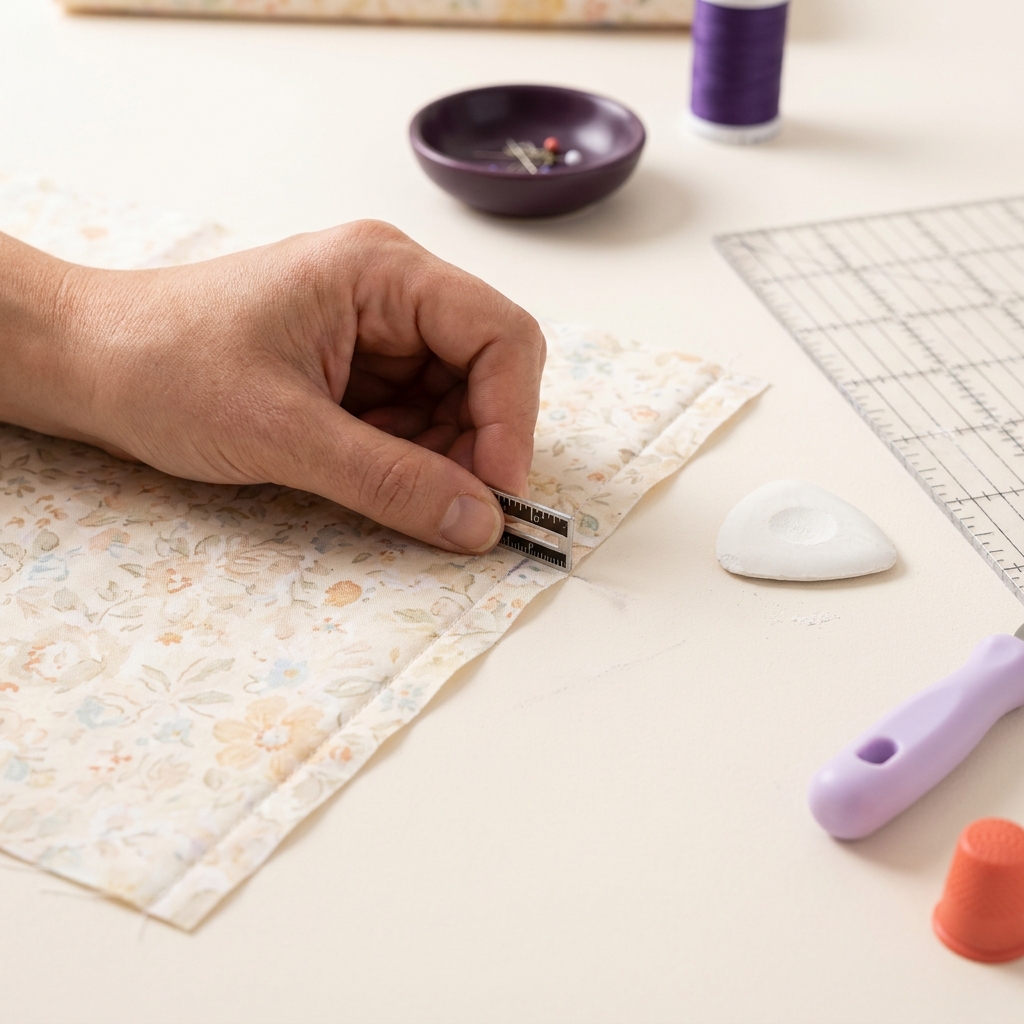
Most machines have marked guide lines on the needle plate. Align the fabric’s raw edge to the correct line and keep it parallel as you stitch. If needed, add a strip of tape as a visual fence. In the Folds: Sewing seam allowance
Marking the stitch line or cut line
If you prefer, mark the seamline on fabric using chalk and a ruler or tracing tools, especially when learning or on tricky curves. This improves accuracy and reduces confusion after removing paper patterns. Doina Alexei: Understanding seam allowance
Metric-imperial quick checks
Useful pairs you’ll see: 1/4 in ≈ 6 mm; 1 cm ≈ 3/8 in; 5/8 in ≈ 16 mm. Don’t mix units within a project unless you convert carefully. Threadistry: What is seam allowance? and The Sewing Retreat: Seam and hem allowances
When to choose a different width
- Curves and delicate areas often use smaller allowances so they press smoothly with less bulk. In the Folds: Sewing seam allowance
- Loose-weave or fray-prone fabrics benefit from wider allowances for strength and finishing. Threadistry: What is seam allowance?
- Special seams need specific widths: for example, French and flat-felled seams are commonly planned at about 1.5 cm/5/8 in. Follow the technique’s requirement. The Sewing Retreat: Seam and hem allowances
Set your seam allowance before you stitch
Next steps
- Need a neat edge without a serger? See Can you use a zigzag stitch instead of a serger?
- Prefer to draw seamlines on fabric? Try these methods: How to transfer patterns to fabric without transfer paper
FAQ
My pattern doesn’t list a seam allowance. What should I do?
Don’t guess. Check all pages and pattern pieces. Some patterns, including many European ones, omit seam allowances and expect you to add them before cutting. If you’re drafting or must choose, 1 cm (plain seams) or 1.5 cm (French/flat-felled) are common starting points. Threadistry: What is seam allowance? and The Sewing Retreat: Seam and hem allowances
Can I change the allowance partway through?
Only if you keep matching seams identical across all joining pieces and update notches/marks. Otherwise sizes will shift and pieces won’t align. Doina Alexei: Understanding seam allowance