
The journal
Does tailor's chalk wash out of fabric? Practical ways to remove marks
Powder or clay tailor's chalk usually brushes and washes out; wax or dye types can linger or stain. Start dry, test first, and follow the care label.
Short answer
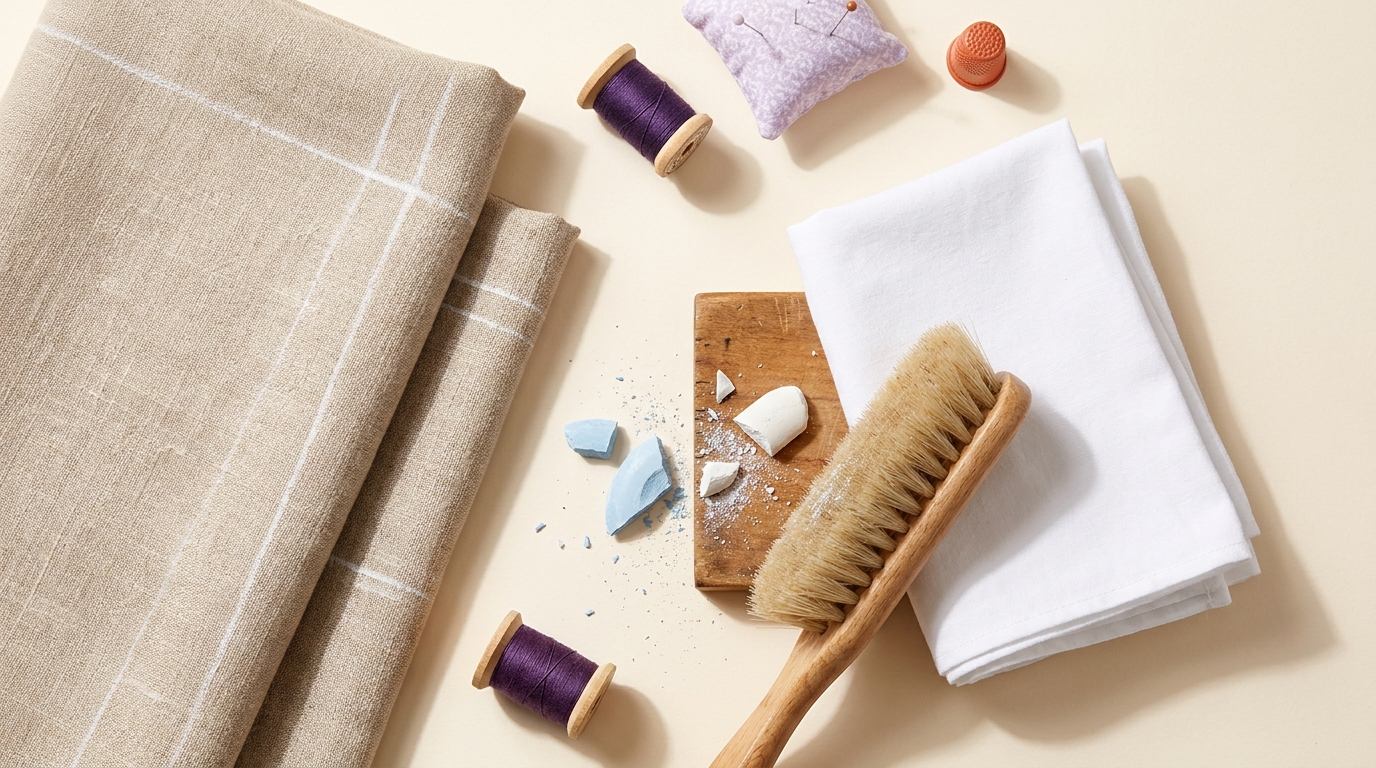
Usually yes for powdery tailor's chalk on washable fabrics: many clay, calcium carbonate, or talc/soapstone formulations are made to brush off and are often removed by laundering. Wax-based or dye-containing marks can be difficult to remove, and heat may set some products, so test first and proceed cautiously (https://www.kearing.com/mark-like-a-pro-how-to-choose-use-and-remove-fabric-marks-with-ease/, https://carmelindustries.com/blogs/all-blogs/learn-more-about-our-tailors-chalk).
Whatever you used, start by brushing away loose residue, then follow the garment’s care label. Delay heat until the mark is gone or you’ve confirmed the product’s removal method (https://www.kearing.com/mark-like-a-pro-how-to-choose-use-and-remove-fabric-marks-with-ease/).
Types of tailor's chalk and how they come out
- Calcium carbonate / powder chalks: Soft, powdery marks that typically brush off and are usually removed with a damp cloth or normal washing on machine-washable fabrics (https://www.kearing.com/mark-like-a-pro-how-to-choose-use-and-remove-fabric-marks-with-ease/).
- Clay-based chalks: Harder, longer-lasting lines; often need more thorough brushing or washing to remove (https://www.kearing.com/mark-like-a-pro-how-to-choose-use-and-remove-fabric-marks-with-ease/).
- Talc/soapstone: Smooth, delicate marks that are generally easy to brush away (https://www.kearing.com/mark-like-a-pro-how-to-choose-use-and-remove-fabric-marks-with-ease/).
- Wax-based chalks: Bold, persistent marks that may require specific methods (e.g., careful low-heat transfer to paper) and can stain certain fabrics; test first (https://carmelindustries.com/blogs/all-blogs/learn-more-about-our-tailors-chalk, https://www.kearing.com/mark-like-a-pro-how-to-choose-use-and-remove-fabric-marks-with-ease/).
- Water- or air-soluble markers/chalks: Often dab off with water or fade with time, but still test on a scrap (https://www.kearing.com/mark-like-a-pro-how-to-choose-use-and-remove-fabric-marks-with-ease/). Some sewists also try gentle wet wipes on scraps for quick checks (https://www.quiltersreview.com/beginners-guide-tailors-chalk/).
Removal steps: start gentle, escalate only if needed
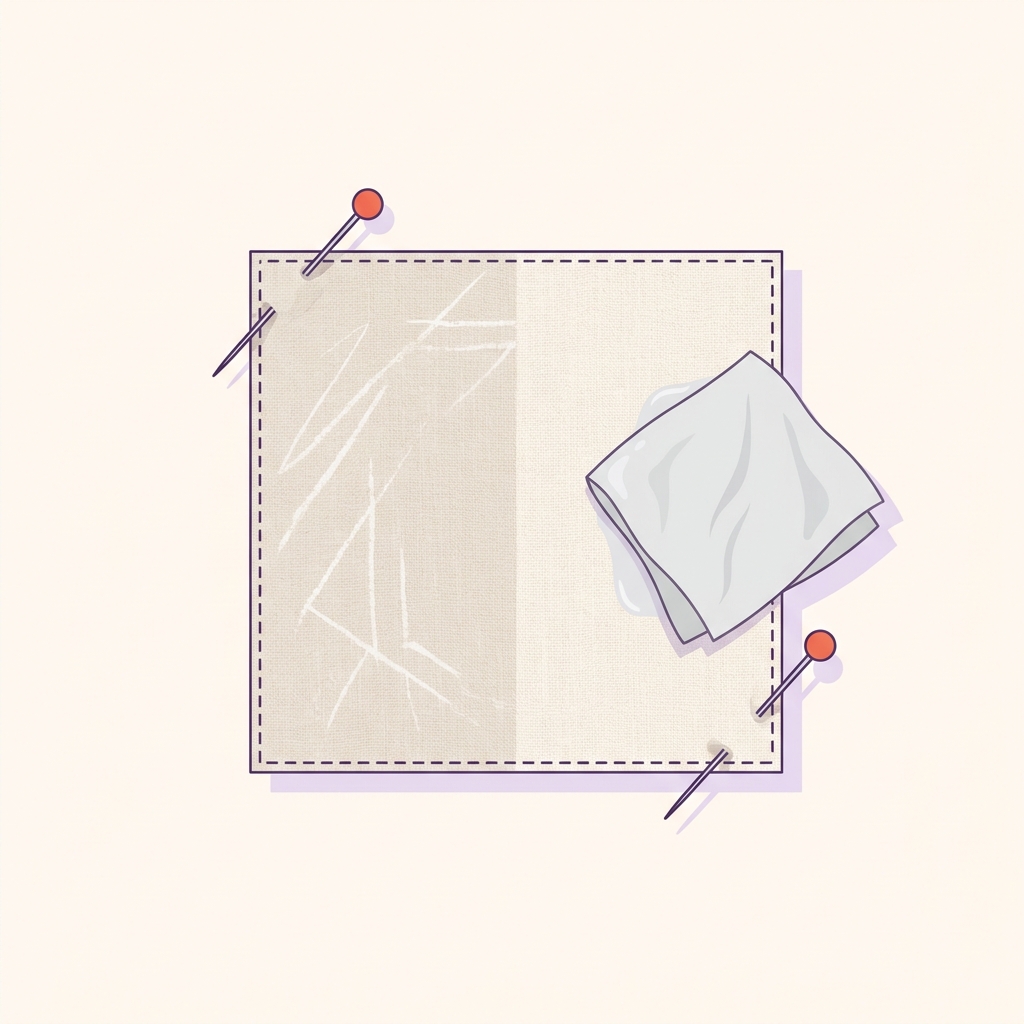
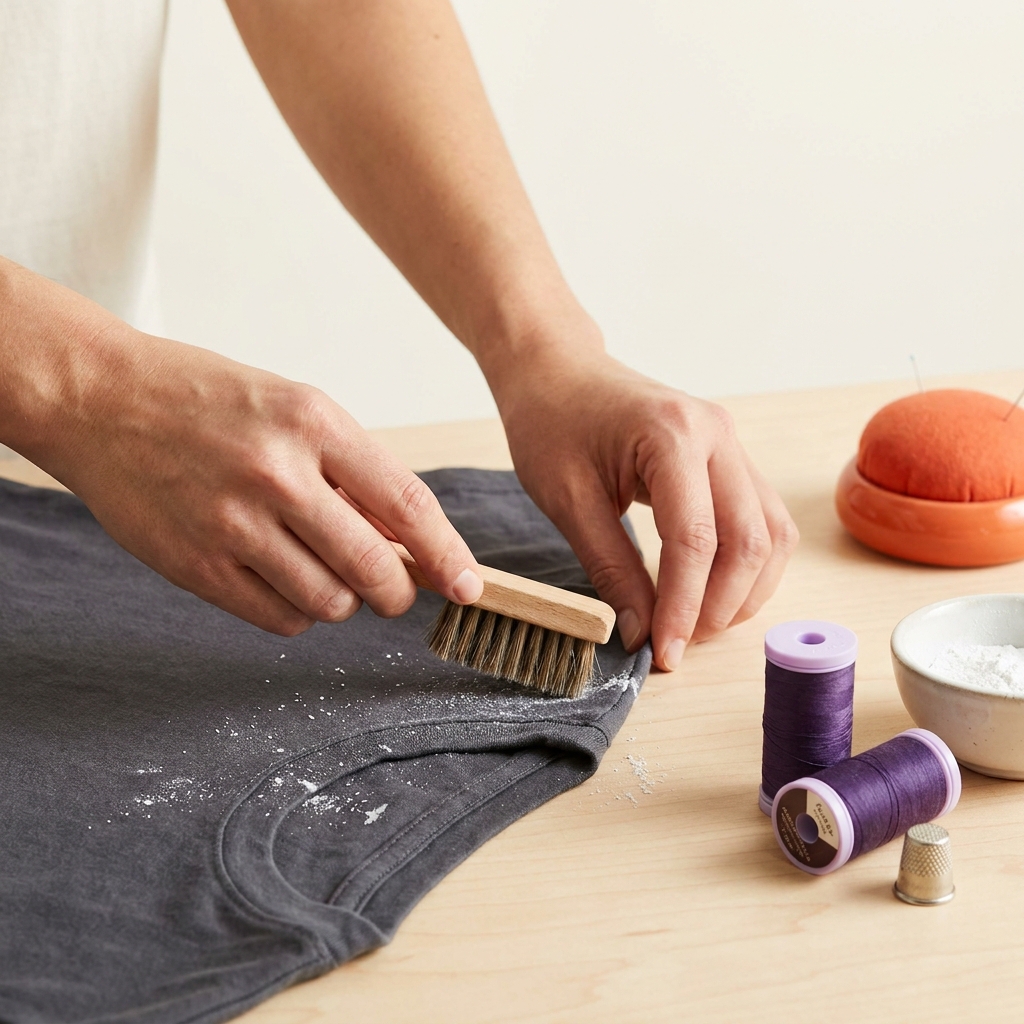
- Dry removal first. Use a soft brush, lint roller, or clean cloth to lift loose powder so you don’t grind pigment into fibers (https://www.kearing.com/mark-like-a-pro-how-to-choose-use-and-remove-fabric-marks-with-ease/, https://carmelindustries.com/blogs/all-blogs/learn-more-about-our-tailors-chalk).
- Dab with a damp white cloth (if safe). For many powdery marks, a gentle dab with water lifts residue. Avoid hard rubbing, which can smear or drive color deeper (https://www.kearing.com/mark-like-a-pro-how-to-choose-use-and-remove-fabric-marks-with-ease/, https://www.quiltersreview.com/beginners-guide-tailors-chalk/).
- Launder per the care label. If the fabric is washable, use cold or warm water with regular detergent and check the mark before drying. Hold off on heat until marks are gone (https://carmelindustries.com/blogs/all-blogs/learn-more-about-our-tailors-chalk, https://www.kearing.com/mark-like-a-pro-how-to-choose-use-and-remove-fabric-marks-with-ease/).
- For wax-based marks, use targeted methods with testing. Some sewists lift wax by placing clean paper towel over the mark and pressing briefly with a low, dry iron to transfer wax into the paper, then washing any residue. Only try heat after confirming on a scrap, because some products set with heat (https://carmelindustries.com/blogs/all-blogs/learn-more-about-our-tailors-chalk, https://www.kearing.com/mark-like-a-pro-how-to-choose-use-and-remove-fabric-marks-with-ease/, https://www.quiltersreview.com/beginners-guide-tailors-chalk/).
- If residue persists, test mild spot solutions on a scrap. Quilters report mixed results with diluted white vinegar, mild dish soap, or other gentle cleaners; some products work, some don’t, and color loss is a risk, so test first (https://www.generations-quilt-patterns.com/quilt-marking-removing-chalk.html).
Remove tailor's chalk safely: quick checklist
Common mistakes to avoid
- Rubbing hard. Aggressive scrubbing can embed or smear pigment; lift gently instead (https://www.kearing.com/mark-like-a-pro-how-to-choose-use-and-remove-fabric-marks-with-ease/).
- Applying heat too soon. Some chalks disappear with heat while others set permanently when pressed. Remove marks before ironing unless your product specifically indicates heat removal and you’ve tested it (https://www.kearing.com/mark-like-a-pro-how-to-choose-use-and-remove-fabric-marks-with-ease/, https://www.generations-quilt-patterns.com/quilt-marking-removing-chalk.html).
- Skipping tests on delicate or valuable items. Light colors, silks, and dry-clean-only pieces are higher risk; test first or use a professional cleaner (https://www.kearing.com/mark-like-a-pro-how-to-choose-use-and-remove-fabric-marks-with-ease/).
Practical scenarios
- Cotton T-shirt (powder mark): Brush off, dab with a damp cloth if needed, then machine-wash per the label. Avoid the dryer until the mark is gone (https://carmelindustries.com/blogs/all-blogs/learn-more-about-our-tailors-chalk).
- Wool coat (unknown mark): Brush only. If you suspect wax/dye or the coat is dry-clean-only, consult a professional cleaner rather than wet-treating (https://www.kearing.com/mark-like-a-pro-how-to-choose-use-and-remove-fabric-marks-with-ease/).
- Silk or delicate fabrics: Make the lightest possible marks and test removal on a scrap. Prefer soft, powdery chalks and avoid heat unless you have verified the method (https://www.kearing.com/mark-like-a-pro-how-to-choose-use-and-remove-fabric-marks-with-ease/).
- Quilting cotton (chalk line): Brush first; many powder lines lift with a gentle damp wipe. If traces remain, launder, checking before heat. Some home remedies have mixed outcomes, so test (https://www.quiltersreview.com/beginners-guide-tailors-chalk/, https://www.generations-quilt-patterns.com/quilt-marking-removing-chalk.html).
Related reading
- How to transfer patterns to fabric without transfer paper , Practical methods
- What is the best way to trace pattern pieces onto fabric? A practical step by step guide
FAQ
Will tailor's chalk come out in the wash?
Powdery chalks commonly brush off and usually wash out on washable fabrics. Wax- or dye-based marks may not, so test on a scrap before marking visible areas (https://www.kearing.com/mark-like-a-pro-how-to-choose-use-and-remove-fabric-marks-with-ease/).
Is it safe to iron over chalk to remove it?
Only if you have confirmed your product is heat-removable and you’ve tested on a scrap. Heat can permanently set some chalks, especially those with wax (https://www.kearing.com/mark-like-a-pro-how-to-choose-use-and-remove-fabric-marks-with-ease/, https://www.generations-quilt-patterns.com/quilt-marking-removing-chalk.html).
What if my garment is dry-clean-only?
Avoid wet or heat treatments and consult a professional cleaner, particularly for suspected wax or dye marks (https://www.kearing.com/mark-like-a-pro-how-to-choose-use-and-remove-fabric-marks-with-ease/).