
The journal
Is a basting stitch the same as a running stitch?
A clear, practical answer: how basting relates to running stitch, when to choose each, and quick how‑tos you can use right away.
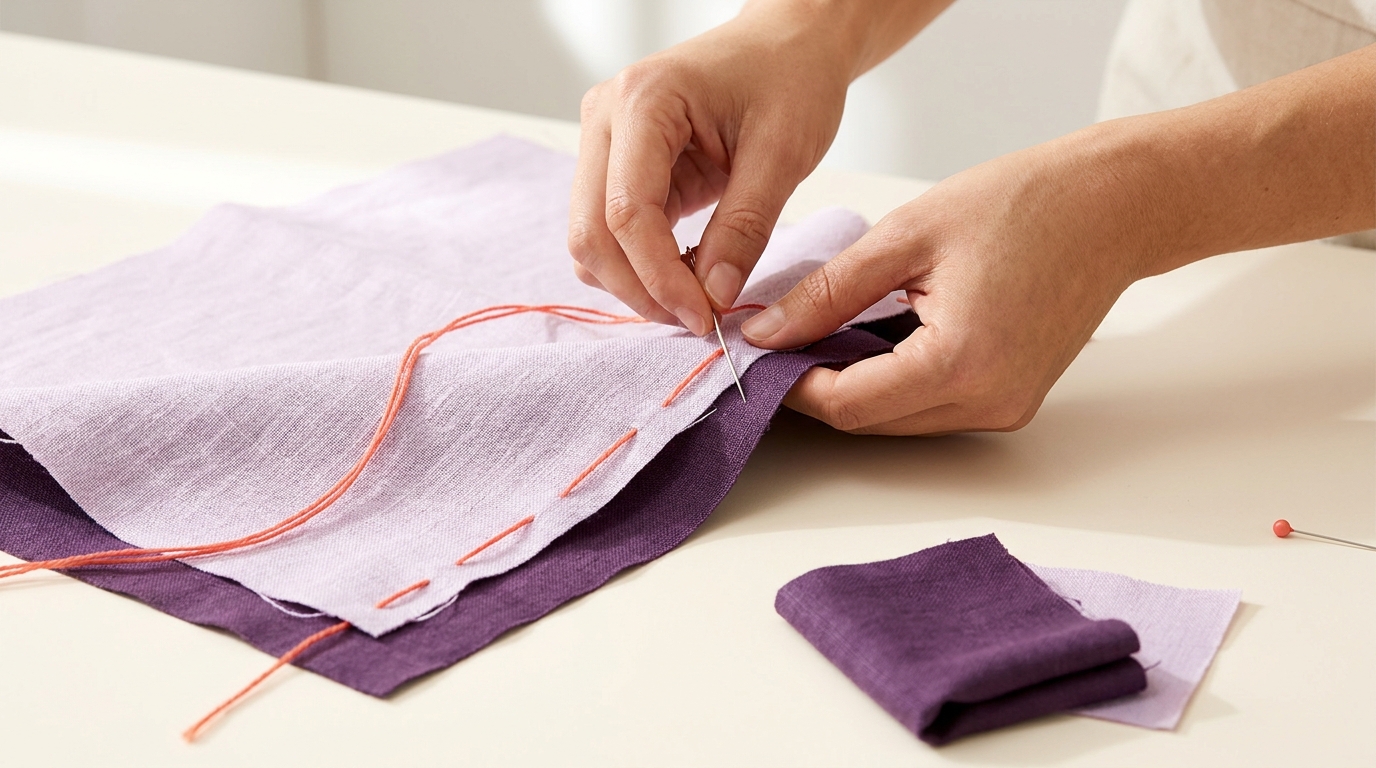
Short answer: not exactly. A basting stitch is a temporary form of running stitch, worked longer and looser to hold fabric in place and then be removed. By contrast, a regular running stitch is a simple line of evenly spaced stitches typically used as part of finished work, such as quilting lines, outlines, or as a base for gathering RSN StitchBank: Running stitch; MadamSew: What is basting in sewing.
What each stitch is
Running stitch
The running stitch is a basic line of straight, evenly spaced stitches. It has many permanent uses in finished work: outlining, quilting, reinforcement and as the base for other techniques (including gathering) RSN StitchBank: Running stitch.
Basting stitch
Basting is a temporary running stitch used to hold layers together, check fit, align stripes or plaids, position zippers and facings, or stabilize a quilt sandwich before quilting. Stitches are worked longer and with looser tension so they can be removed easily MadamSew: What is basting in sewing; Doina Alexei: Sewing Basics , What is Basting?. Not to be confused with stay stitching, which is a short machine stitch inside a single layer to prevent stretching and is not removed Deborah J Sews: Stay stitching vs basting.
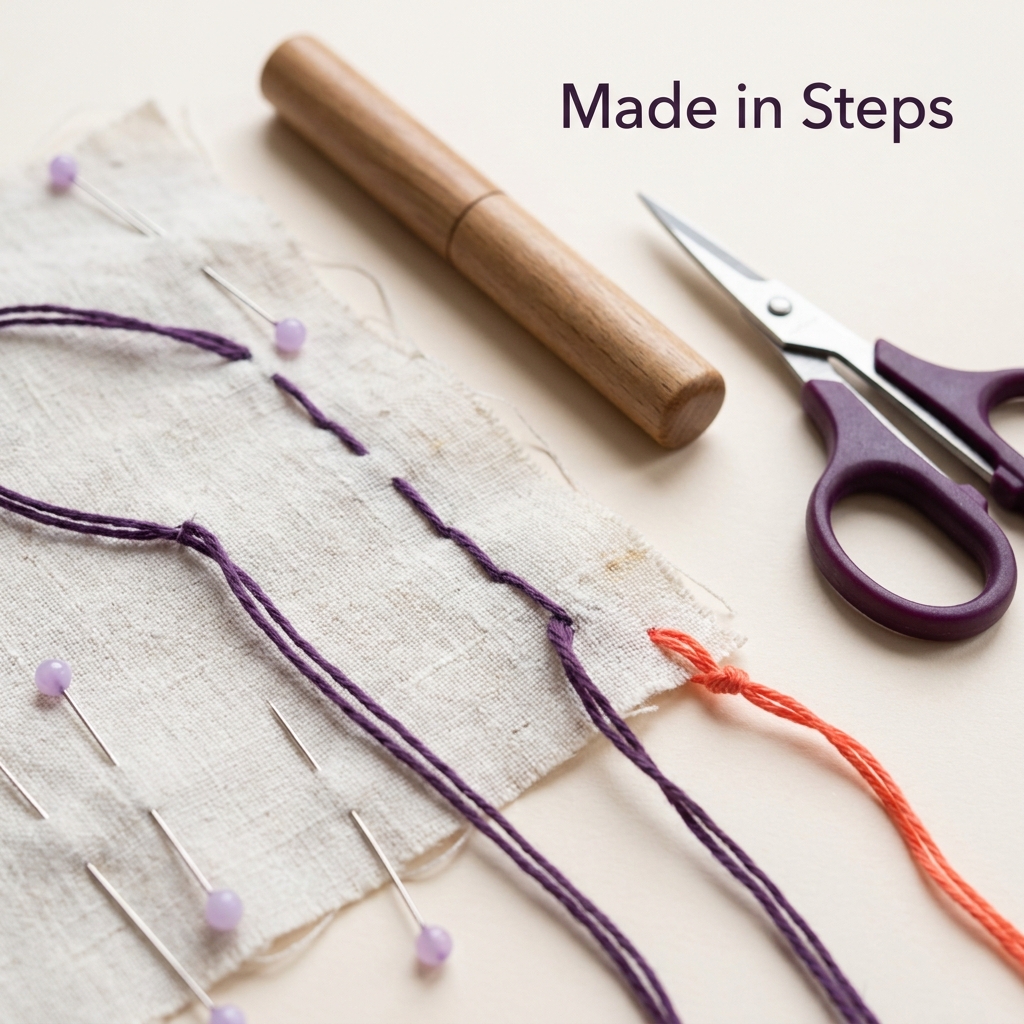
When to choose basting vs running stitch
- Choose basting when you need a temporary hold you can remove after fitting or alignment. Typical cases: easing a sleeve cap, testing a waistband placement, holding a zipper or facing, stabilizing slippery or delicate fabrics, or preparing quilt layers MadamSew: What is basting in sewing; Doina Alexei: Sewing Basics , What is Basting?.
- Use a running stitch when the line will remain in the finished piece. Common uses: quilting lines, decorative outlining, reinforcement, and as the stitching that forms gathering rows RSN StitchBank: Running stitch.
Quick how‑tos
How to hand baste
- Thread a hand needle with contrasting thread. You can skip a knot and leave a tail so removal is easier.
- Work long, loose in‑and‑out stitches through the layers along the seam or placement line. Keep tension relaxed.
- After permanent stitching, pull out the basting by gently drawing on a thread tail or snipping at intervals and lifting out the thread Doina Alexei: Sewing Basics , What is Basting?.
How to machine baste
- Set your machine to its longest straight stitch.
- Do not backstitch; sew along the edge to hold layers. Leave long thread tails.
- To hide machine basting without removing it, place it close to the raw edge and sew your final seam slightly deeper so the basting sits in the seam allowance; otherwise, snip and remove it after sewing MadamSew: What is basting in sewing.
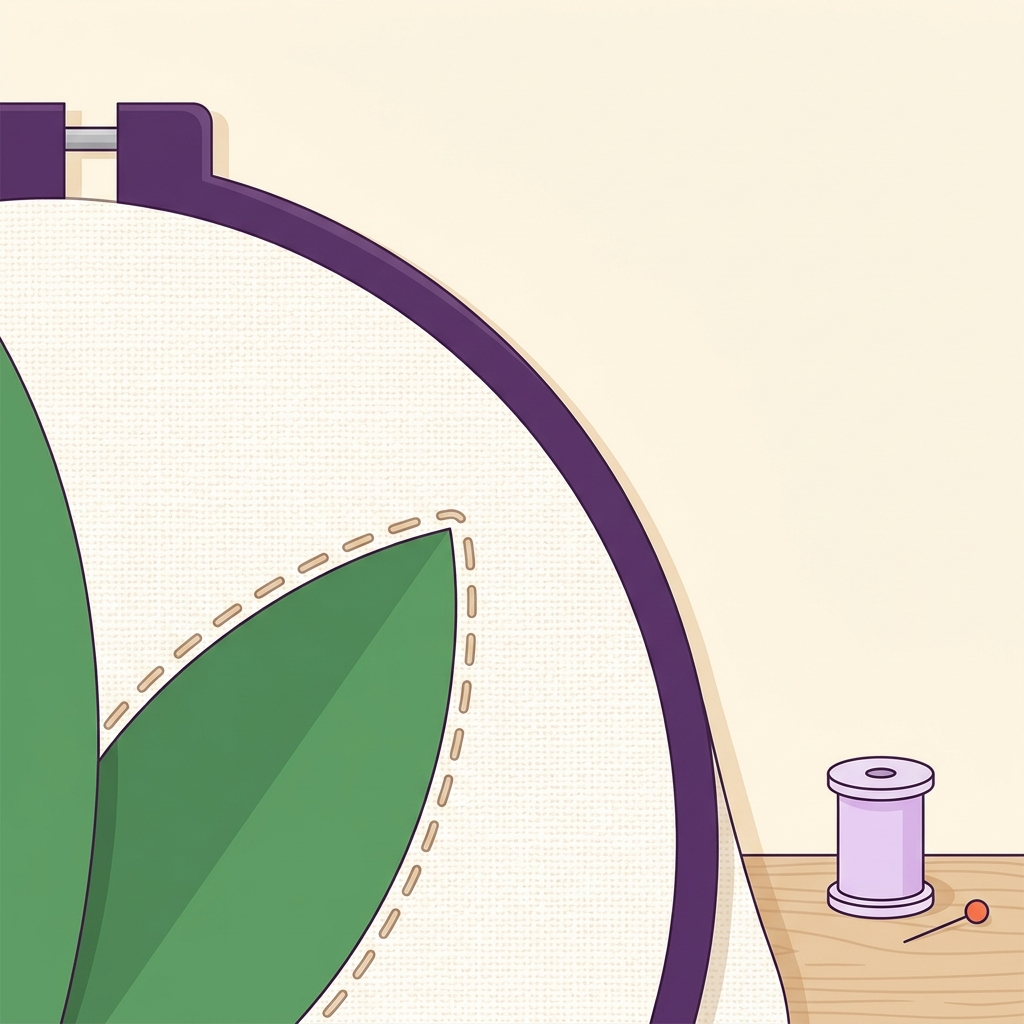
Set up basting so it removes cleanly
Common pitfalls
- Pulling basting too tight, which can pucker fabric and make removal harder. Keep it relaxed Doina Alexei: Sewing Basics , What is Basting?.
- Backstitching at the start/end of basting rows, which locks the thread and complicates removal MadamSew: What is basting in sewing.
- Confusing basting with stay stitching. Stay stitching is a short stitch on a single fabric layer to prevent stretching; it is not meant to be removed Deborah J Sews: Stay stitching vs basting.
Related from Made in Steps
FAQ
Do basting stitches always come out?
Usually yes, because they are meant to be temporary. If you place machine basting very near the edge, you can sometimes leave it hidden inside the seam allowance after you sew the final seam MadamSew: What is basting in sewing.
Is running stitch ever temporary?
Yes. Basting is, by definition, a temporary type of running stitch. The same in‑and‑out motion is used; the purpose, stitch length and tension differ RSN StitchBank: Running stitch.