
The journal
What stitch is best for gathering?
The most reliable stitch for gathering is two parallel rows of long straight basting within the seam allowance. Add a third row for extra control on fine or slippery fabrics, and use a zigzag over cord when threads snap or fabric is bulky.
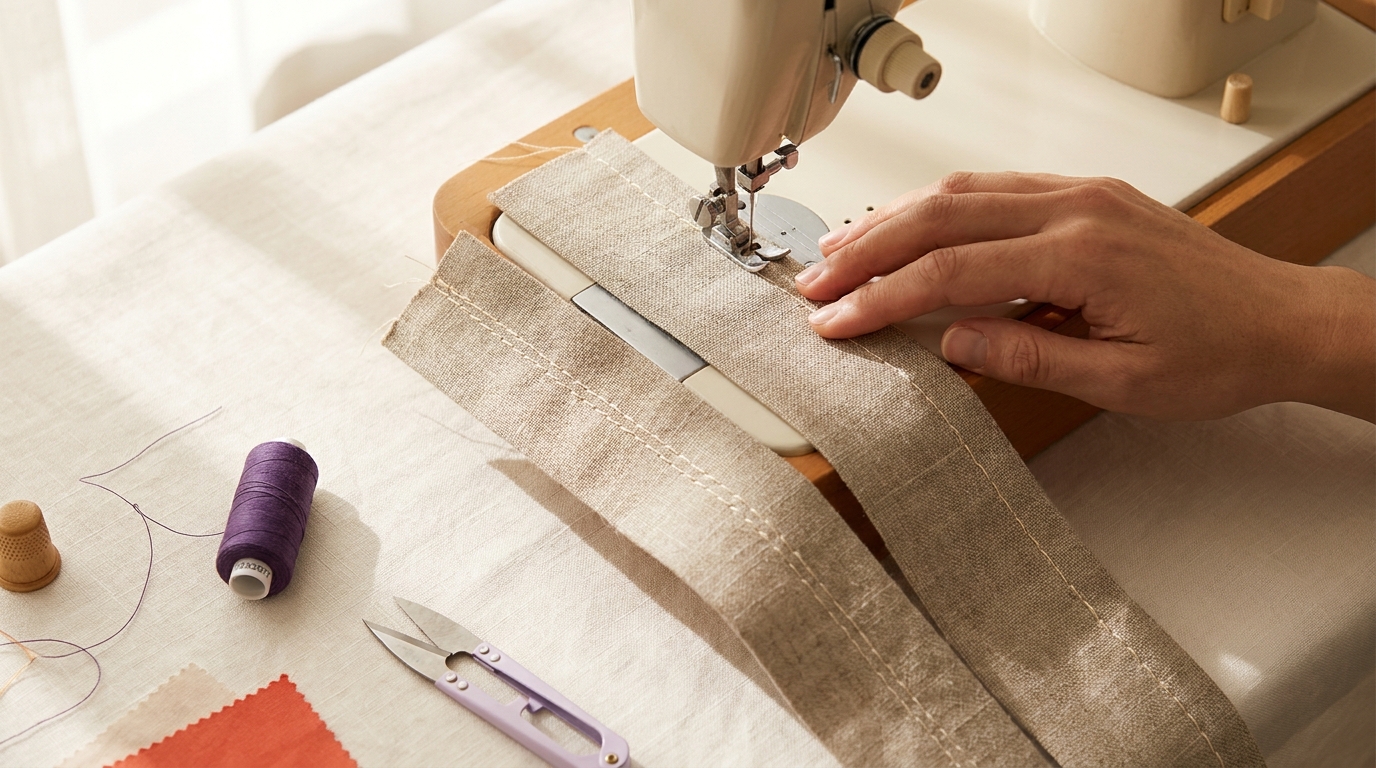
Use two parallel rows of long straight basting stitches within the seam allowance for most gathers. This classic method is widely recommended for even, controllable results, and you can add a third row for extra stability on fine or slippery fabrics. If threads keep breaking or the fabric is bulky, switch to a zigzag stitch sewn over a cord or heavy thread so you pull the cord instead of stressing the stitches (see Sew4Home tutorial; Chalk and Notch gathering tip).
How to sew even gathers with two basting rows
This is the dependable, do-it-most-of-the-time method.
- Set your machine to a straight stitch with a long length (often the longest setting; many sewists use 4-6 mm). Leave long thread tails and do not backstitch at the end you will pull (LearnCreateSew overview; Sew4Home tutorial).
- Sew the first basting line within the seam allowance, commonly about 1/4 inch from the raw edge. Sew a second, parallel line 1/8-1/4 inch away. Keep both lines inside the seam allowance and parallel so the fabric can slide on the threads (Chalk and Notch; Sew4Home).
- Identify the bobbin threads. They usually pull more easily than needle threads. Gently pull the bobbin tails and slide the fabric along the threads to gather. Knot or figure‑eight the tails around a pin at the far end to keep the gathers from slipping (Sew4Home; Chalk and Notch).
- Pin the gathered edge to the flat piece, matching centers and notches for even distribution. Sew the seam with the gathered layer facing up so you can watch and adjust tucks as you go. Many sewists stitch between the two basting lines, then remove any visible basting (Chalk and Notch; Sew4Home).
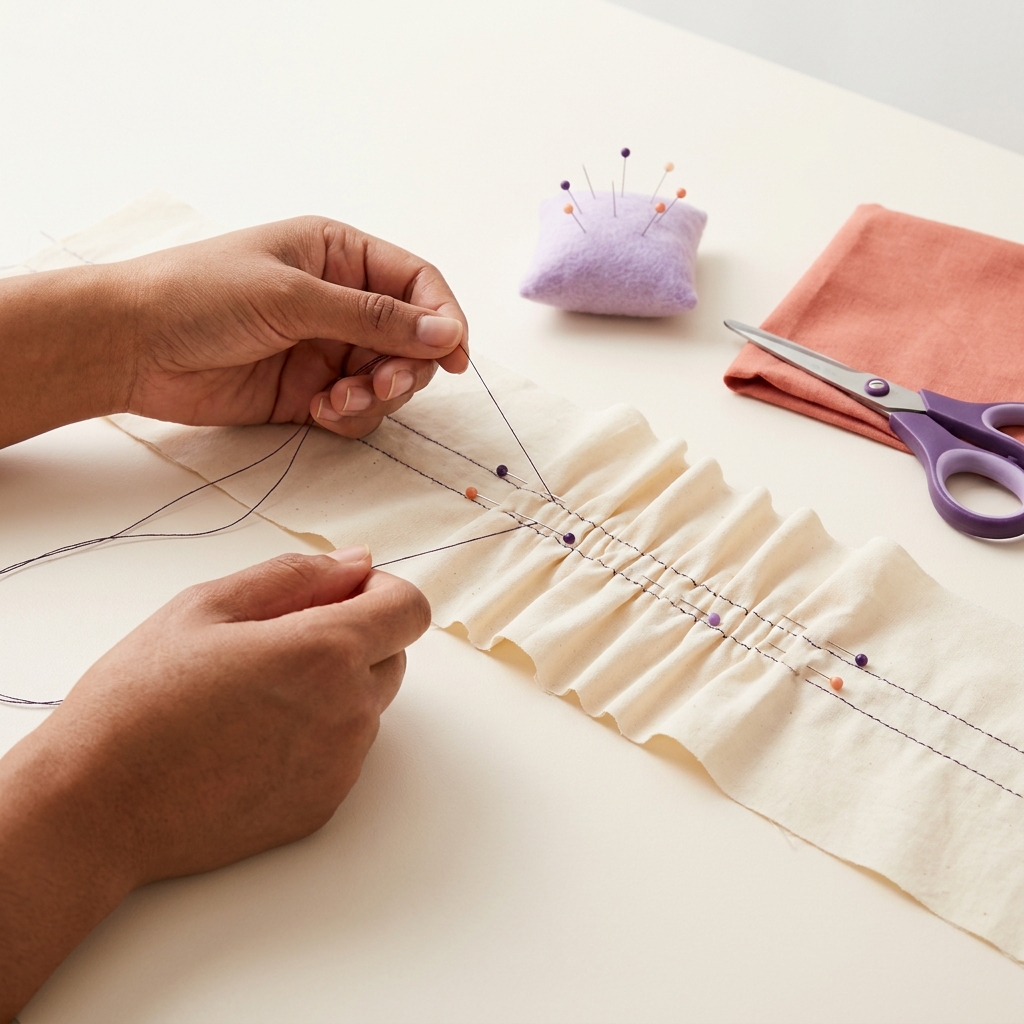
When to add a third basting row
A third parallel basting row increases control and helps keep gathers straight and even, which is useful on lightweight or slippery fabrics, or when you need especially precise results. This extra row is commonly placed 1/8-1/4 inch from the others and still within the seam allowance (Chalk and Notch; Sew4Home).
Alternatives for tricky fabrics
Zigzag over cord (corded gathering)
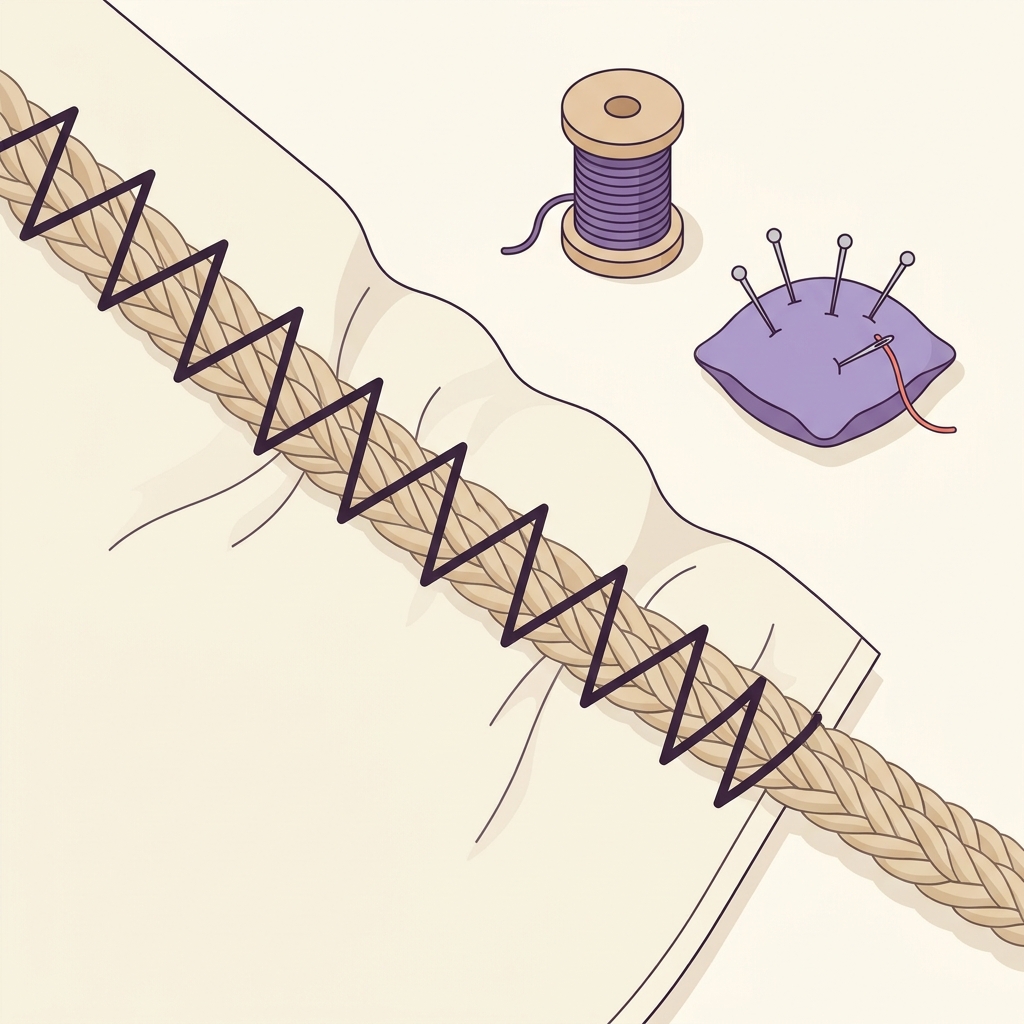
- Lay a sturdy cord, dental floss, or heavy thread along the gather line, then zigzag over it without catching the cord. Pull the cord to gather, secure, then stitch the seam just beside the zigzag tunnel. This reduces the risk of snapped gathering threads on heavy or textured fabrics (Chalk and Notch; Sew4Home).
Elastic or specialty feet
- Sewing over stretched elastic can produce quick, even gathers; it adds bulk, so choose it when elastic will be enclosed or desired (Chalk and Notch).
- If you have a serger, increasing differential feed will gather as you stitch; some machines and feet also offer dedicated gathering options (Sew4Home).
Common mistakes and quick fixes
- Snapped threads: Slide the fabric along the threads instead of yanking. Work from both ends toward the center on long runs (LearnCreateSew; Sew4Home).
- Backstitching in the wrong place: Don’t backstitch at the end you plan to pull. Secure the opposite end by wrapping tails in a figure-eight around a pin (Chalk and Notch).
- Uneven gathers: Mark centers/quarters on both pieces before gathering, then adjust so gathers sit straight up and down. Stitch with the gathered side up to spot tucks in time (Sew4Home).
- Too little room to sew: Keep both basting lines inside the seam allowance; if you’re tight on space, use the second row just inside the final seam so it’s easy to remove afterwards (Chalk and Notch).
Related help: If your stitch looks off while basting, check tension issues in Why there are thread loops under your fabric when you sew, and choose a suitable needle in What needle size should I use for different fabrics?
Quick setup before you gather
FAQ
What stitch length works best for basting gathers?
Use a long straight stitch. Many machines gather well at 4-6 mm; the longest setting helps the fabric slide on the threads (LearnCreateSew; Sew4Home).
Should I pull the needle or bobbin threads?
Both can work, but the bobbin threads are usually easier to pull and less likely to break during gathering (Sew4Home).

If straight basting gives you trouble, the zigzag-over-cord method and elastic gathering are practical backups that keep control and reduce broken threads (Chalk and Notch; Sew4Home). For hand gathering or additional methods, see this overview of options (By Hand London tutorial).